RV Shower Replacement Cost: What to Expect in 2026
RV shower replacement costs $30 to $50 for a faucet or valve swap, or $450 to $1,400 for a full pan and surround kit, $900 to $2,500 installed. Here's what drives the range and what each tier actually gets you.
Typical cost
$30–$2,500
A shower faucet or valve swap runs $30-$50 in parts or $150-$400 installed; a full pan and surround replacement runs $450-$1,400 DIY or $900-$2,500 with a shop, depending on budget vs. OEM parts
Most people pay around
$450
Costs verified July 2026
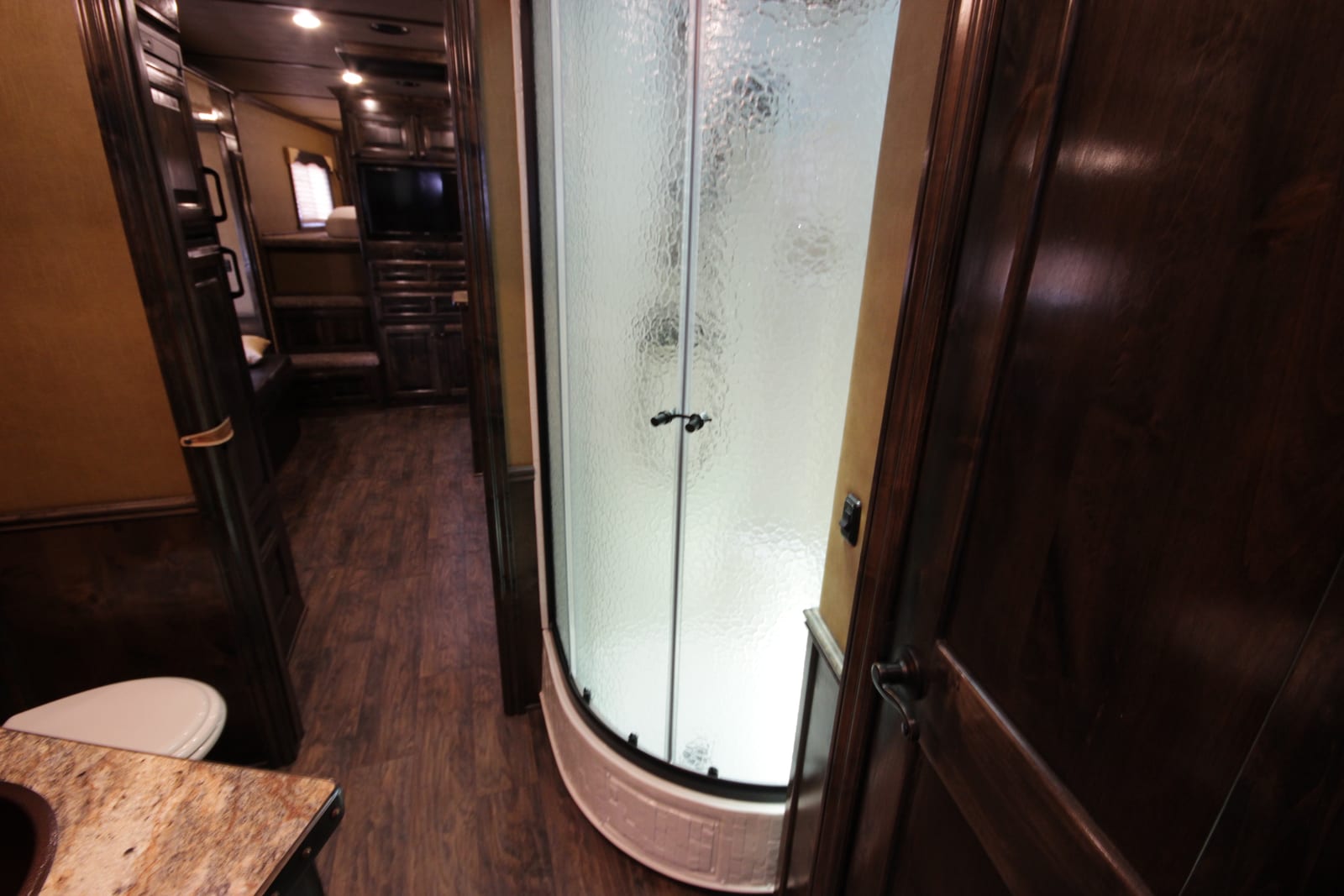
A worn-out RV shower faucet or valve costs $30 to $50 to replace yourself, or $150 to $400 with a mobile tech. A full pan and surround replacement is a different scale of job entirely: $450 to $1,400 in parts if you do it yourself, $900 to $2,500 installed. The gap between those two numbers isn’t really about labor rates. It’s about whether you’re swapping one part behind an access panel, or pulling an entire glued-in enclosure off the wall.
Why shower replacement cost varies so much
Shower problems in an RV come in two shapes, and they don’t cost anywhere near the same amount to fix.
The first shape is a valve or faucet that’s stopped working right, a diverter that won’t switch between the head and the tub spout, a handle that leaks around the stem, water temperature that swings without warning. That’s a parts problem. A new Valterra or Dura Faucet valve runs $30-$50, and if there’s a rear access panel behind the shower wall, it’s a genuinely reasonable DIY afternoon.
The second shape is structural: a cracked or delaminated pan, black mold creeping up behind a surround that’s separating from the wall, or water pooling somewhere it shouldn’t. That’s not a parts problem anymore, it’s a demolition-and-rebuild problem, because the pan and surround are usually one glued-together system that doesn’t come apart cleanly.
What a shower faucet or valve actually costs
Most RV shower valves come from one of two companies, Valterra (which makes the Phoenix Faucets and Catalina lines) or Dura Faucet, and pricing between them is close enough that brand loyalty matters less than finish and feature set.
| Type | Brand/line | Typical price |
|---|---|---|
| Basic plastic control valve | Dura Faucet Classical | $34-$40 |
| Brass control valve with vacuum breaker | Valterra Phoenix | $28-$34 |
| Brushed nickel valve with lever handles and diverter | Valterra Catalina | $35 |
| Chrome valve with acrylic knobs | Dura Faucet | $43-$49 |
| Tub and shower faucet with diverter | Dura Faucet Classical | $44-$45 |
None of these are expensive parts on their own. What determines whether this is a $30 fix or a $300 fix is entirely about access. RVs that route the shower valve behind a removable panel, often accessible from a closet or the back of an adjoining wall, make this a straightforward job. RVs without one mean working through the shower wall itself, and one owner’s account of exactly that job noted that getting the hot water flex line threaded and connected in the cramped space took almost an hour by itself. Multiply that kind of friction across every fitting and a valve swap that should take 20 minutes can eat an afternoon.
Shower pan costs: budget vs. OEM pricing gap
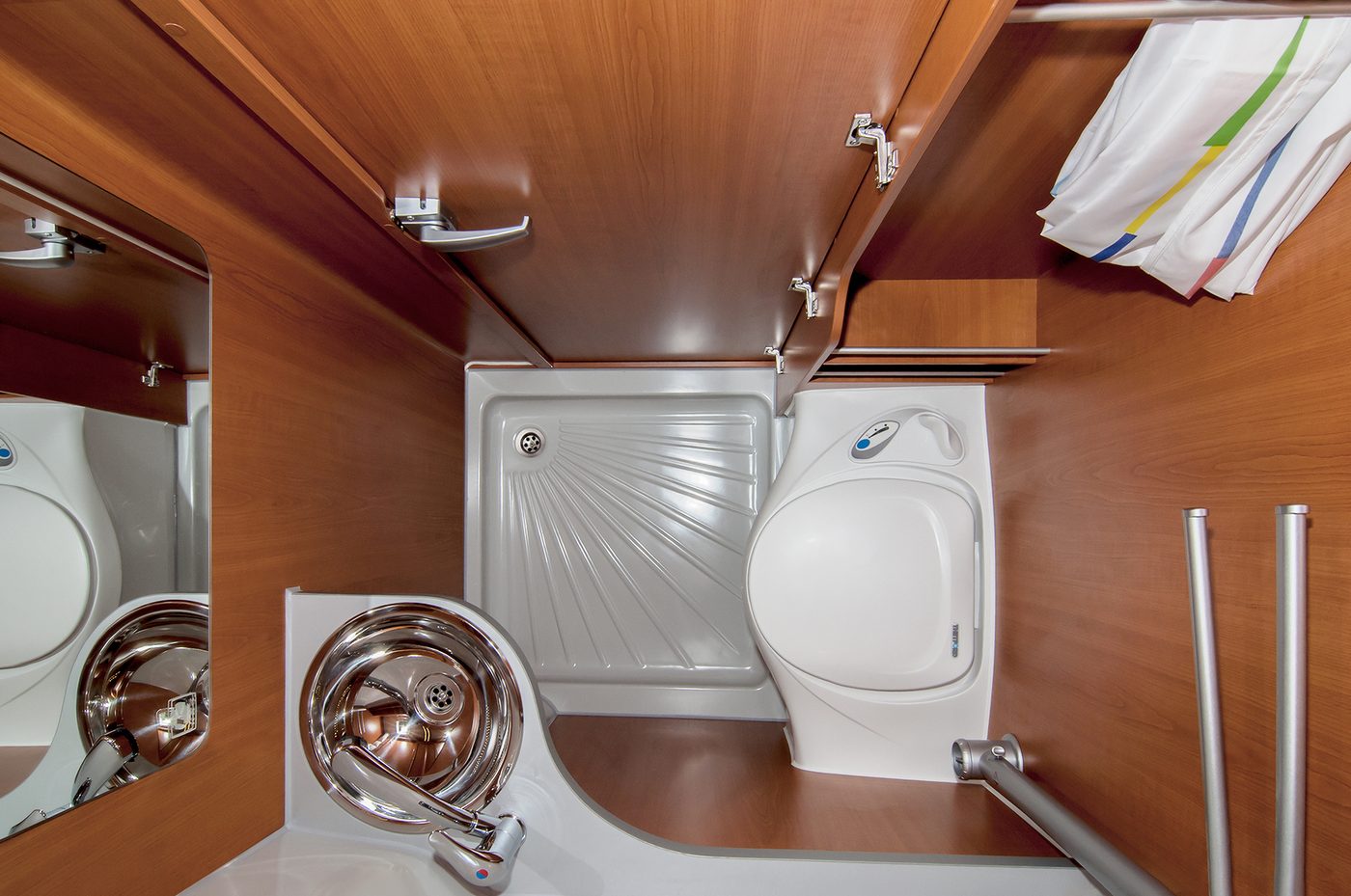
This is where shower replacement cost gets genuinely confusing if you’re only shopping one source. A basic RecPro 36 x 24 x 5-inch plastic shower pan, textured bottom, left or right drain, runs $66. Owners on Jayco and Grand Design RV forums, shopping OEM-style Better Bath replacement pans through dealer parts channels, report paying $376 to $742 for what is, functionally, the same category of part: a molded pan that catches shower water and drains it.

That price gap isn’t a scam, it’s sourcing. A generic aftermarket pan is molded to standard dimensions and sold at volume through online RV parts retailers. An OEM-style pan is sourced through the RV manufacturer’s own parts network to guarantee an exact fit to a specific floor cutout, and that guarantee costs money, sometimes $300-$600 more for the same size pan. If your existing footprint matches a standard 24x36 or 32x24 cutout (most do), the budget pan is worth trying first. If your RV has an unusual cutout or you want a drop-in guarantee, the OEM route removes the fitting risk at a real premium.
Shower surround and skylight kits
A surround is the wall enclosure around the pan, and it’s usually sold separately from the pan itself. Lippert’s Better Bath surround, a one-piece 45-7/8 x 23-3/4 x 62-inch ABS acrylic shell with a built-in soap dish, runs $683 installed with pressure-sensitive tape or spray adhesive (neither included in the box price).
Surrounds with a skylight, a translucent cutout in the ceiling panel that lets daylight into an otherwise windowless shower stall, or a window opening for ventilation, cost more to install than a flat wall because that cutout has to be cut precisely and sealed well enough that it doesn’t become the next leak point. If your current surround has one of these features and you’re replacing it with a flat panel to save money, factor in whatever daylight or ventilation you’re giving up along with the dollar savings.

What professional installation costs
Mobile RV tech rates run $120 to $195 an hour depending on region, on the higher end in the West Coast and Northeast, lower in the Midwest and South, plus a $75-$200 trip fee on top of whatever the job itself takes. My RV Works quotes $175/hr for a certified tech; Reliable Mobile RV Service quotes $125/hr with a one-hour minimum. For a valve-only swap, that puts total professional cost at roughly $150-$400 once you add a modestly priced part to an hour or two of labor.
Pan and surround replacement is a bigger commitment. A shower pan swap has been reported taking around 4 hours of shop time on its own, which at typical rates puts labor alone in the $500-$900 range before the pan or surround parts are added. One owner’s warranty claim covered that 4 hours of labor plus the pan itself and the owner still walked away paying over $750 out of pocket, which gives a realistic sense of how a “just the pan” job balloons once labor, tax, and shipping are all counted. Add a surround at $683 and full replacement jobs commonly land in the $900-$2,500 range depending on how much of the enclosure needs to come out and whether the subfloor underneath turns out to be sound.
Can you DIY a shower replacement yourself?
For a valve swap, yes, especially if your RV has a rear access panel. Shut off the water supply, disconnect the hot and cold lines behind the wall, unscrew the old valve body from its mounting bracket, thread on the new valve, and reconnect the lines in reverse order. Without an access panel, the same job means working through the shower wall itself, which is doable but slower and requires more patience threading fittings in a tight space.
Pan and surround replacement is a much bigger DIY undertaking, and it’s worth being honest with yourself about the scope before starting. Most RV shower walls are bonded to the studs with construction adhesive or heavy double-sided tape rather than screwed in place, which means removing them intact (if you’re hoping to reuse the surround, or just want a clean demo) takes real patience with a thin pry tool worked slowly around every edge. Forum accounts of this job consistently describe it as removing “the entire shower enclosure, walls, and plumbing,” not just unbolting a pan. Once everything is out, check the subfloor before installing anything new. Water that’s been finding its way past a failed pan seal for months often leaves soft, spongy decking underneath, and putting a new pan down over compromised subfloor just delays the same failure by a season or two. If the floor feels soft anywhere near the old pan’s footprint, stop and address that first.
Does insurance or an extended warranty cover a shower?
Most RV extended warranty contracts treat a failed shower valve or cartridge as a covered plumbing component defect, the same as they’d treat a failed kitchen faucet, provided the failure isn’t traced to damage or neglect. A cracked pan from impact, ordinary wear, or mineral buildup typically isn’t covered. The gray area is water damage discovered under a pan that’s been leaking slowly for a long time before anyone noticed; a lot of contracts categorize that as gradual damage or a maintenance lapse rather than a sudden mechanical failure, which can mean a claim gets denied even though the pan itself would otherwise qualify. The extended warranty cost guide breaks down how these contracts define plumbing coverage and where the common exclusions sit.
Standard RV insurance generally treats shower components the way it treats any other built-in fixture: covered under a comprehensive or collision claim if the damage traces to a covered event like a collision or storm, excluded if it’s simply wear, age, or a slow undetected leak.
How shower cost compares to other RV bathroom systems
Shower work sits at a strange spot on the RV cost spectrum: the cheapest possible fix (a $30 valve) and one of the more expensive interior jobs (a full pan and surround at $2,500) both live on this same page. If a shower leak has been going on for a while, don’t assume the shower itself is the whole story. The water damage repair guide and the floor repair guide both cover what happens once water has spent real time getting into places it shouldn’t, which is often the bigger line item once a pan finally gets pulled.
The toilet replacement guide covers the other major bathroom fixture, and it’s worth reading together with this page if you’re budgeting a full bathroom refresh rather than a single repair, since toilet work is comparatively cheap and quick next to anything involving the shower pan.
What drives the price
| Cost factor | How it moves the price |
|---|---|
| Valve-only fix vs. full pan and surround replacement | This is the single biggest cost multiplier on this page. A leaking or worn-out shower valve is a $30-$50 part. A cracked pan or delaminated surround wall means removing the entire enclosure, which is a different job at 10-20x the cost, not a bigger version of the same job. |
| Budget aftermarket pan vs. OEM-style pan | A basic RecPro 36x24x5 plastic shower pan runs $66. RV owners on Jayco and Grand Design forums report paying $376-$742 for OEM-style Better Bath replacement pans, sometimes before shipping and tax. Both are functionally shower pans; the price gap is brand, material thickness, and exact-fit sourcing through a dealer parts department instead of a generic aftermarket supplier. |
| Bonded wall panel removal | Most RV shower surrounds are glued to the wall studs with construction adhesive or double-sided tape, not screwed in. Pulling them off without cracking the fiberglass or ABS panel, especially if you're hoping to reuse them, is the single hardest part of a DIY pan replacement and the main reason iRV2 and Jayco Owners forum threads describe the job as removing 'the entire shower enclosure, walls, and plumbing' rather than just the pan. |
| Valve access | Some RVs have an access panel behind the shower valve, reachable from a closet or the back of a bedroom wall. Others don't, and getting to the valve means working through the shower wall itself. One owner's forum account of a valve swap noted that just threading the hot water flex line back on, once access was cramped, took almost an hour on its own. |
| Surround style: flat wall vs. skylight/window cutout | A plain one-piece surround like Lippert's Better Bath, at $683 for a 45-7/8 x 23-3/4 x 62-inch unit, installs as a single glued-in shell. Surrounds with a skylight cutout or a window opening need precise cutting and sealing around that opening, which adds labor time on both a DIY job and a professional one. |
| Labor rate and regional variance | Mobile RV techs run $120-$195/hr depending on region (My RV Works quotes $175/hr for a certified tech; Reliable Mobile RV Service quotes $125/hr with a 1-hour minimum), plus a $75-$200 trip fee. A shower pan swap alone has been reported taking around 4 hours of shop time, which puts labor alone in the $500-$900 range before parts. |
| Subfloor condition once the pan comes out | A shower pan that's been leaking slowly for a while often hides soft or rotted subfloor underneath. That's not discovered until the old pan is out, and it turns a straightforward pan swap into a floor repair job first. This is the most common reason a quoted shower job comes in over budget. |
DIY or hire a pro?
- Cost
- $30-$1,400 in parts depending on scope, from a bare valve swap to a full pan-and-surround kit
- Time
- An afternoon for a valve-only swap with reasonable access; a full weekend for pan and surround replacement, mostly because old wall panels are glued down and slow to remove intact
- Skill
- Beginner to intermediate for a valve swap depending on access to the plumbing; advanced for pan and surround work
A valve swap is approachable if your RV has a rear access panel: shut off the water, disconnect the supply lines behind the wall, unscrew the old valve body, thread on the new one, and reconnect. Without an access panel, you're working through the shower wall itself, which is slower and less forgiving. Pan and surround replacement is a bigger undertaking. The wall panels are usually bonded with adhesive, not screwed, so getting them off without cracking them takes patience and a thin pry tool worked slowly around every edge. Once the old pan is out, check the subfloor before installing anything new. A new pan glued or screwed down over a still-soft subfloor just buys you the same failure again in a couple of seasons.
What you'll need
- Valterra Catalina Brushed Nickel Shower Control Valve with Diverter
- Dura Faucet Classical Tub & Shower Faucet with Diverter (affiliate)
- RecPro RV Shower Pan, 36 x 24 x 5 inches, right drain (affiliate)
- Lippert Better Bath Shower and Tub Surround
As an Amazon Associate, we earn from qualifying purchases.
- Cost
- $150-$400 for a valve-only job, $900-$2,500 for a full pan-and-surround replacement
- Time
- 1-2 hours for a valve; 4-8+ hours for pan and surround work, longer if subfloor damage turns up once the old pan is out
- Booking
- Worth it for pan and surround jobs given the real risk of cracking bonded wall panels during removal, and worth it any time you suspect subfloor damage under the pan
A tech's hourly rate ($120-$195/hr in most regions) plus a trip fee makes a straightforward valve swap a fairly quick, moderately priced job, usually cheaper than the aggravation of fighting a cramped access panel yourself. Pan and surround work is where the professional fee earns its keep: a shop has the practiced hands to remove bonded panels without cracking them, the eye to catch soft subfloor before it becomes a bigger problem, and the tools to reseal every seam so it doesn't leak again in six months. One owner's warranty claim covered roughly 4 hours of labor plus the pan itself and still left them over $750 out of pocket, which gives a rough sense of how quickly pan-and-surround costs stack up even with partial coverage.
Will insurance or a warranty cover it?
- An extended warranty or service contract may cover this if the failure is mechanical and the component is listed in your plan.
- This is usually out of pocket. Standard policies treat it as wear and maintenance. A service contract bought before it fails is the main way to shift the risk.
Mechanical breakdown coverage under most RV extended warranty contracts treats a failed shower valve or cartridge the same as other plumbing component defects, which typically means it's covered when the failure isn't caused by neglect or damage. A cracked pan from impact, general wear, or mineral scale buildup usually isn't covered under a standard contract. The trickier case is water damage discovered under a pan that's been leaking undetected for a long stretch; many contracts treat that as a maintenance or gradual-damage exclusion rather than a covered mechanical failure, which is worth checking before assuming a warranty claim will cover a full pan-and-surround job. See the [extended warranty cost guide](/rv-extended-warranty-cost/) for how these contracts define plumbing coverage and common exclusions.
Coverage depends on your policy and the cause of damage. Confirm specifics with your provider.