RV Water Damage Repair Cost: What to Expect in 2026
RV water damage repair costs $150 to $20,000+ depending on how long the leak ran. Here's what each severity tier actually costs and when insurance pays.
Typical cost
$150–$25,000
Surface spots run $150–$800 DIY; soft floor sections cost $1,500–$4,000 at a shop; full delamination or structural rebuilds reach $8,000–$25,000+
Most people pay around
$3,500
Costs verified June 2026
RV water damage repair costs anywhere from $150 for a surface wipe-down and reseal to $20,000 or more for a structural rebuild involving rot, mold, and delaminated walls. The number that matters most isn’t the leak itself. It’s how long the water sat before anyone found it. A seam failure caught in a week costs a few hundred dollars. The same failure found a year later, after water soaked the subfloor and framing, turns into a five-figure job that sometimes exceeds the rig’s value.
What does RV water damage repair actually cost?
The tiers below reflect real shop quotes and owner-reported bills. The ranges aren’t wide to hedge. They’re wide because damage extent is genuinely unknowable until panels come off and a moisture meter reads what dried and what didn’t.
Surface and cosmetic damage ($150–$800): The leak entry point has been sealed, the interior surface is stained or warped, but the subfloor and framing are dry. A shop inspection, panel replacement, and reseal costs $300–$800. DIY with sealant, replacement paneling, and a weekend of drying runs $150–$400.
Soft floor section ($1,500–$4,000): One or two sections of subfloor are wet and soft, but the damage hasn’t spread into wall framing or slides. Shops cut out the affected subfloor, replace it with marine-grade plywood, treat any minor surface mold, and install new flooring material. Owner-reported bills for this scope run $1,800–$3,500. Full breakdowns for standalone flooring work are in the RV floor repair cost guide.
Wall or ceiling delamination ($1,500–$5,000 per panel): Water behind the sidewall lamination separates the fiberglass skin from the inner substrate, creating visible bubbles or ripples. Delamination repair involves injecting or replacing adhesive, sometimes pulling the entire panel. A single-panel repair runs $1,500–$4,000. Wider delamination across multiple panels has produced quotes of $5,000–$15,000.
Subfloor plus mold remediation ($3,000–$9,000): Mold follows moisture. Remediation in an RV means containment, removal of affected material, treatment with antimicrobial agents, and inspection to confirm the source is gone. Adding mold to a subfloor job typically doubles the bill.
Structural rebuild ($8,000–$20,000+): Rot has reached framing members, multiple areas are affected, and the rig needs systematic teardown and rebuild. At this level, the decision often becomes repair-vs-replace. The rule of thumb: once a repair estimate crosses 50 to 70% of the RV’s current market value, most owners total it out or sell as-is rather than sink more money into an aging rig. For a newer or high-value rig, repair is nearly always still the right call if the damage was caught before rot spread. Documented owner quotes for full structural work on larger travel trailers and Class A motorhomes have reached $25,000.
Where the damage is changes what you pay
Location is the second-biggest cost driver after time. Here’s how the numbers shake out by area:
| Damage Location | Typical Shop Repair Range | What Drives It Higher |
|---|---|---|
| Ceiling (no deck damage) | $300–$1,500 | Roof deck rot, insulation replacement |
| Floor section (subfloor swap) | $1,500–$4,000 | Mold, slide-out involvement, framing |
| Sidewall delamination (per panel) | $1,500–$5,000 | Panel count, adhesive vs. full replacement |
| Slide-out floor or topper | $800–$3,500 | Mechanism damage, new seals, subfloor |
| Multiple areas or structural | $8,000–$20,000+ | Extent of rot, framing, mold spread |
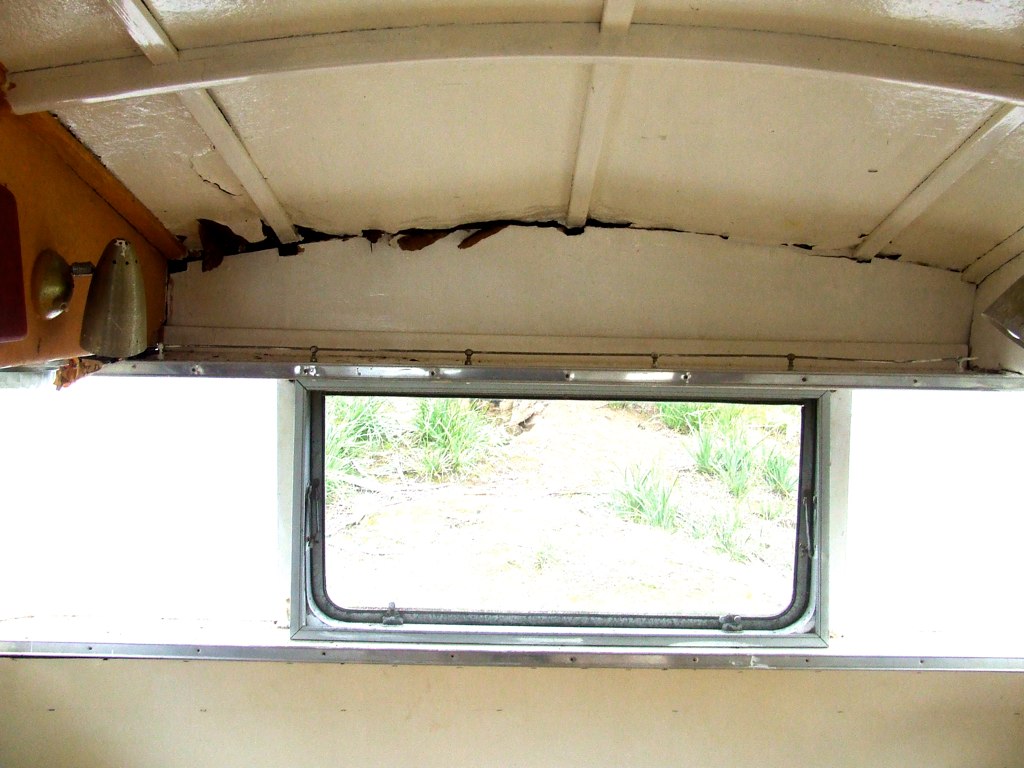
Ceiling damage is the cheapest to repair in isolation, but it almost always signals a roof problem directly above. Shops that fix the ceiling without tracing the leak entry point will be seeing that RV again within a year.
How much does delamination add to a water damage bill?
Delamination deserves its own answer because owners frequently get the term wrong. Delamination is not water damage directly. It’s what happens after water sits behind the sidewall laminate long enough to destroy the adhesive bond between the fiberglass skin and the inner substrate. You’ll see bubbles or ripples along the side of the rig, and pressing on them confirms the skin has separated.
A DIY delamination repair kit costs $100–$300 and works for very minor separation with no active moisture behind it. Professional repair for a small delaminated section runs $1,500–$2,500. Broader damage across a full side panel has produced quotes in the $5,000–$15,000 range depending on the rig and the shop.
The catch: if water is still present behind the laminate, no adhesive repair holds. The moisture source has to be eliminated, the area dried completely, and the underlying substrate inspected before any laminate repair makes sense. Skipping that sequence wastes money twice.
If you’re looking at a used RV with visible bubbling, the RV delamination repair page covers the full cost and decision framework.
Does RV insurance cover water damage?
Sometimes. The distinction every adjuster will make is sudden-and-accidental versus gradual-and-maintenance-related.
A hail storm that punches through the roof membrane and lets water into the interior for three days is a covered peril under comprehensive RV insurance. A roof seam that slowly failed over two seasons because the lap sealant was never maintained is a maintenance issue. Insurers call the second one neglect, and they deny those claims consistently.
The specific events that typically get covered: storm-driven roof damage, falling tree branches, burst pipes during a hard freeze, hail punctures. What doesn’t get covered: gradual seal failure, deferred maintenance, dry rot, rust, and corrosion. Even on covered claims, your deductible applies, so smaller repairs often don’t justify the claim and the premium impact.
Before filing anything, check the full guide on whether RV insurance covers water damage for documentation tips and what adjusters actually look for.
DIY repair: what works and what doesn’t
Small, dry, confirmed-no-mold damage is legitimately DIYable. The decision tree is straightforward.
Get a moisture meter before touching anything. A reading below 15–16% in the subfloor or wall means the area dried adequately and surface repair is appropriate. A reading above 20% means moisture is still present and surface repair will trap it, accelerating mold growth and further rot.
If the area is dry:
- Remove damaged interior paneling or trim.
- Inspect and press on the subfloor. Solid subfloor can stay. Spongy or discolored subfloor needs to be cut out and replaced with marine-grade plywood.
- Seal the exterior entry point with Dicor lap sealant or an equivalent product rated for RV use.
- Let everything dry completely before reassembling. A dehumidifier in an enclosed space cuts drying time significantly.
- Replace interior paneling and flooring.
Stop and call a shop if you find soft subfloor that extends further than expected when you probe it, any visible black or greenish-black mold, or framing members that crumble when pressed. These require containment and removal equipment that DIY work can’t safely provide.
How to keep a small problem from becoming a large one
The most expensive water damage jobs share one characteristic: they were invisible for a long time. Water enters at a seam, a vent collar, a window gasket, or a slide-out seal. It runs laterally through the wall cavity, soaks into plywood and insulation, and shows up as a ceiling stain or soft floor months later, well after the damage is already serious.
The practical answer is a twice-yearly inspection. Get on the roof in spring before camping season and in fall before storage. Push on every seam, press around every vent and AC flange, and look for lap sealant that has cracked, shrunk, or pulled away from the surface. Inside, press on the floor in every corner and near every exterior wall, check ceiling corners and window frames for brown staining, and run a hand along the base of interior walls feeling for bubbling or separation. Any sponge, staining, or give is worth investigating immediately.
The preventive cost is almost nothing. A tube of Dicor self-leveling lap sealant runs under $15 and handles a cracked seam before water ever gets in. A complete reseal of the roof by a mobile tech costs $400–$1,400 depending on rig size and penetration count. That’s the job that prevents the $4,000 floor replacement.
For the specific cost and process of a professional reseal, the RV roof resealing guide covers what shops do differently from a DIY pass and when each approach makes sense.
Slide-out seals are the other primary failure point owners miss. They compress and crack over cycles, and when they go, water runs directly into the slide floor. Replacing slide seals proactively costs far less than replacing the slide subfloor reactively.
When to get a quote vs. when to authorize repairs
Get a written, itemized estimate before authorizing any water damage repair over $500. Shops will often start with a diagnostic assessment ($100–$250) that gives you the scope before committing to the full repair. That diagnostic is worth paying for.
Ask about the schedule too, not just the price. A simple surface repair runs 1 to 3 days once you’re on the shop’s calendar. Floor section replacement with proper drying time takes 5 to 10 shop days. Full structural work with framing replacement and delamination repair can run 2 to 4 weeks. None of that counts the wait to get in the door: busy RV shops are commonly booked 3 to 8 weeks out.
Ask specifically:
- Is the subfloor dry throughout, or only in the area you can see?
- Will framing be inspected, or just the surface materials?
- Is mold testing included in the assessment?
- What happens to the estimate if you find additional damage once panels are removed?
That last question matters. Water damage repairs frequently expand once walls come off because the leak tracked further than the surface evidence suggested. A shop that won’t give a straight answer about scope changes mid-repair is worth walking away from.
For context on what happens when the RV roof itself needs repair alongside interior water damage, those two jobs often go together and most shops will quote both simultaneously. Getting a combined estimate usually saves on the total labor hours compared to two separate visits.
If the water damage has compromised the roof membrane or deck, compare those quotes against the warranty and insurance resources before deciding which direction to go on a major repair.
What drives the price
| Cost factor | How it moves the price |
|---|---|
| How long the leak ran undetected | A seam leak caught in week one might cost $200–$500. The same seam left a full season can rot framing and subfloor, turning a $400 job into $4,000–$8,000. |
| Location of damage (floor vs. wall vs. ceiling) | Floor repairs average $1,500–$4,000 for a section. Wall delamination runs $1,500–$5,000 per panel. Ceiling damage is typically cheaper ($300–$1,500) unless the roof deck is also wet. |
| Rot and mold present | Mold remediation on an RV adds $1,500–$5,000 depending on spread. Structural rot in framing adds $2,000–$6,000 on top of surface repairs. |
| DIY capability | Small, dry spots with no rot or mold cost $150–$400 in materials for a capable DIYer. The moment rot or active mold is found, professional remediation pays for itself in resale value and health risk. |
| RV value vs. repair cost | On a rig worth $10,000, a $9,000 structural repair is a total-loss decision. On a $75,000 Class A, the same job is routine. Run the numbers before authorizing anything over $3,000. |
| Shop labor rate by region | Midwest and South shops commonly charge $120–$145/hr. West Coast and Northeast shops charge $170–$195/hr. The same two-day floor job can differ by $800–$1,200 in labor alone. |
| Slide-out involvement | Slide seals are a primary leak source. If water tracked into a slide floor or topper, add $800–$2,500 for slide mechanism inspection, subfloor work, and new seals. |
DIY or hire a pro?
- Cost
- $150–$500 in materials
- Time
- A weekend to 3 days
- Skill
- Beginner to intermediate
DIY works for small, dry surface damage where no soft spots, rot, or mold are present. Clean the affected area, let it dry completely (a dehumidifier speeds this up), replace damaged trim or paneling, and reseal any exterior entry points. Stop and call a shop the moment the subfloor feels spongy, the damage smells musty, or you find discoloration spreading behind paneling. Mold and rot require professional tools and containment to do safely.
What you'll need
- RV caulk and lap sealant (Dicor or similar) (affiliate)
- Portable dehumidifier (affiliate)
- Moisture meter
- Luan or marine-grade plywood (for small subfloor patches)
As an Amazon Associate, we earn from qualifying purchases.
- Cost
- $800–$20,000 depending on severity
- Time
- 2 days to 3 weeks at a shop; scheduling can add 2–6 weeks
- Booking
- Get 2–3 written estimates
Professional repair is required for any soft floor, active mold, delamination, or structural rot. Shops will use moisture meters and thermal cameras to map the full extent before touching anything, and the actual scope often expands once panels come off. Get itemized estimates in writing before authorizing work, and ask specifically whether structural framing will be inspected.
Will insurance or a warranty cover it?
- RV insurance may cover this when the cause is a covered peril (storm, collision, fallen tree), not gradual wear or neglect.
- This is usually out of pocket. Standard policies treat it as wear and maintenance. A service contract bought before it fails is the main way to shift the risk.
Sudden, accidental events (storm-driven roof puncture, hail, burst pipe during a freeze) are typically covered by comprehensive RV insurance; gradual leaks, deferred maintenance, dry rot, and slow seam failures are not.
Coverage depends on your policy and the cause of damage. Confirm specifics with your provider.