RV Delamination Repair Cost: What to Expect in 2026
RV delamination repair costs $200 for a DIY injection kit to $25,000+ for full sidewall replacement. Here's what each tier costs and when to walk away.
Typical cost
$200–$25,000
A DIY injection kit for a small bubble runs $160–$300; localized professional repair costs $1,000–$3,000; a single damaged panel runs $3,000–$8,000; severe damage with rot reaches $8,000–$20,000; full sidewall replacement runs $10,000–$25,000+
Most people pay around
$5,000
Costs verified June 2026
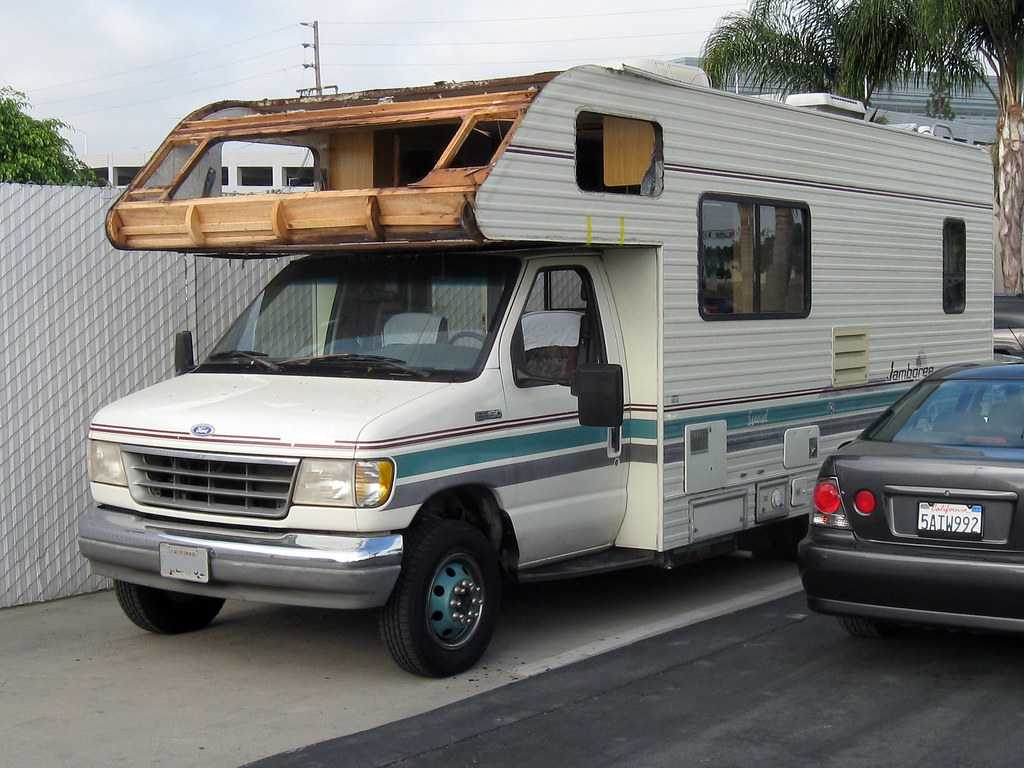
RV fiberglass delamination repair costs anywhere from $200 for a small DIY injection kit to $25,000 or more when the outer skin of a full sidewall has separated and the substrate beneath it has rotted. The number that matters is not the size of the bubble you can see. It’s what the luan, foam, and framing look like once someone gets behind the skin. A dinner-plate bubble caught before moisture reached the wood might cost $1,500 at a shop. The same bubble found after two wet seasons can reveal a panel that needs complete replacement and a wall frame full of rot.
What does RV delamination repair actually cost?
The tiers below are grounded in professional shop quotes and owner-reported bills. Ranges are wide because the real scope of delamination damage is genuinely unknown until panels open.
DIY injection kit ($160–$300 in materials): For small, dry bubbles where a moisture meter confirms the substrate is still sound, commercial injection resin kits let you drill small ports at the bubble edge, inject low-viscosity adhesive, and clamp the skin flat while it cures. The #12 kit from RV Roof and Wall covers roughly 10 square feet and retails at $162. Similar kits from other suppliers run $75–$300. This path works on early-stage, localized separation where no moisture has compromised the luan or foam. It does not restore the gel coat appearance, and results on anything larger than a basketball are inconsistent.
Minor/localized professional repair ($1,000–$3,000): A few dinner-plate-sized bubbles, dry substrate confirmed by the shop’s moisture meter, no window or trim penetrations in the affected area. The shop drills, injects, clamps, and fills. These jobs typically bill 4–8 labor hours at $150–$225/hr plus materials, and most shops turn the job around in 1–2 days once cure time is factored in.
Moderate panel damage ($3,000–$8,000): A larger section of wall has separated, the luan substrate has softened or partially deteriorated, and windows or trim must come off to access the repair area. The shop removes the exterior trim, pulls the fiberglass skin, replaces damaged substrate sections, and rebonds the skin. Owner-reported bills for this scope consistently land in the $3,500–$7,000 range. The upper end appears when multiple window cutouts require reinstallation. Figure on 3–7 shop days for this tier, driven mostly by how many windows and trim pieces have to come off and go back on.
Severe damage with rot ($8,000–$20,000+): Widespread delamination, structural wood rot in framing members, and water that traveled far enough to affect multiple areas. At this scope, the job resembles a partial rebuild rather than a repair. Documented owner quotes for this level of work on travel trailers and fifth wheels have reached $15,000–$20,000.
Full sidewall replacement ($10,000–$25,000+): When delamination is extensive enough that the only sound method is a complete side-out and re-skin, costs climb steeply. Manufacturers approached about in-warranty repairs have swapped entire units rather than undertake full-side rebuilds. One documented case from an RV Life community member put the total repair at $24,000 split between owner and manufacturer. A full sidewall rebuild typically runs 2–4 weeks in the shop, on top of whatever scheduling backlog the shop is already carrying.
Repair method vs. cost vs. when it actually works
The three legitimate repair paths differ significantly in cost, scope, and the conditions that make each one viable.
| Repair Method | Typical Cost Range | Works When |
|---|---|---|
| DIY injection kit | $160–$300 (materials) | Bubble is small, substrate is dry, no rot |
| Professional injection/rebonding | $1,000–$3,000 | Localized damage, sound dry substrate, shop-confirmed |
| Panel section replacement | $3,000–$8,000 | Substrate damaged, luan needs replacement, penetrations involved |
| Full sidewall rebuild/replacement | $10,000–$25,000+ | Widespread separation, framing rot, or factory re-skin required |
The single factor that separates the first two rows from the last two is substrate condition. Dry luan can be rebonded. Wet, deteriorated luan cannot hold adhesive regardless of what product you inject. Any shop or kit that promises to fix active-moisture delamination without first removing the affected skin is selling a repair that will fail again within a season.
What actually causes fiberglass sidewall delamination
Delamination is not the damage itself. It is what happens after water gets behind the fiberglass skin and sits long enough to dissolve the contact adhesive that bonds the skin to the luan or foam substrate beneath it.
The failure sequence is almost always the same. A seal fails at a seam, window frame, vent collar, or roof-to-wall junction. Water enters slowly, sometimes a few drops per rain. It runs down inside the wall cavity, soaks the luan, and over weeks or months destroys the adhesive bond from the inside. The owner sees nothing from the outside until the skin has enough pressure behind it to bubble or ripple. By that point, the hidden damage is typically far larger than the visible bubble suggests.
Failed seals at the roof-to-wall cap junction are the single most common entry point. A seal that cracked, shrank away from the surface, or was never maintained creates a highway for rainwater straight down the inside of the sidewall. This is why you will find delamination running vertically up a wall panel, following the path of water rather than stopping at the bubble edge.
Impact-caused delamination is less common but does happen. A low branch strike, a minor parking collision, or a bump against a garage wall can crack the fiberglass skin without being visible from the outside. Water then enters through the crack, and the delamination process follows.
The repair-vs.-replace math
Delamination repair is unique among RV repairs because the math can genuinely favor walking away from the rig rather than fixing it. The rule of thumb across the RV repair community is straightforward: when the repair estimate approaches 40–60% of the current market value of the RV, the repair stops making financial sense for most owners.
A $6,000 repair on a 2008 travel trailer worth $9,000 leaves you with a repaired trailer that will sell for approximately $9,000 and cost you $6,000 to own. That math produces a $3,000 net loss compared to selling the trailer as-is for parts or as a project. A $6,000 repair on a $55,000 fifth wheel is a straightforward call in the other direction.
The complication is that delamination repairs have a high probability of scope expansion. A shop that quotes $3,500 to repair a single panel based on the exterior appearance routinely finds rot in the framing or substrate that was invisible before the skin came off. Getting an itemized estimate with explicit language about what happens if additional damage is discovered is not optional on any delamination job over $1,000.
Before authorizing work on any rig with significant delamination, compare the repair estimate against current market values for comparable rigs in your area. The RV water damage repair cost guide covers the full cost framework for related damage types that often accompany delamination, including subfloor rot and mold.
The insurance angle: sudden vs. gradual
Standard comprehensive RV insurance covers sudden and accidental physical damage. Delamination almost never qualifies.
Insurers classify delamination as a maintenance-related failure because the root cause is a failed seal that the owner should have inspected and maintained. That characterization holds regardless of how fast the damage progressed or how invisible the failure point was from the ground. If the water entered gradually through a seam, the claim is gradual. Gradual is excluded.
The documented exception is a sudden physical event: a branch punching through the fiberglass skin during a storm, a collision impact that breaks the bonding in a specific area, hail damage severe enough to fracture the skin directly. In those cases, the delamination is a direct consequence of a covered peril rather than maintenance neglect. Even then, adjusters want documented evidence that the delamination is confined to the impact zone.
A small number of specialty policies include delamination coverage under endorsements or riders. USAA members through Progressive, AARP RV coverage through Hartford, and certain regional farm bureaus have been cited in owner forums as including delamination under specific policy terms. This is worth verifying against your actual policy language rather than relying on forum reports. The full insurance coverage guide explains what adjusters look for and how to document a claim.
DIY repair: the honest assessment
DIY injection repair works well enough on small, dry bubbles to justify the $160–$300 kit cost in the right situation. It is not appropriate for most delamination cases owners actually encounter, because most delamination is found after moisture has already compromised the substrate.
Before buying a kit, test with a moisture meter. Press the probe against the fiberglass surface as close to the bubble edge as possible, or through a small drill port. Readings below 15% indicate the substrate may still be dry enough for injection to work. Readings above 20% mean moisture is present and no adhesive repair will hold.
If the substrate is dry:
- Drill injection ports (3/16-inch bit) every 4–6 inches along the edge of the separation, just inside the bubble perimeter.
- Load the syringe with the resin and inject slowly into each port, moving inward as the resin fills the cavity.
- Clamp the skin flat against the substrate using boards and ratchet straps, or suction-cup clamps for curved panels. Sustained, even pressure during the 24–48 hour cure is what determines whether the rebond holds.
- Fill the injection ports with gel coat or a compatible filler compound and sand smooth.
The result will be structurally improved but cosmetically imperfect. If the bubble was large, shadowing or slight surface irregularity will remain. For a rig where appearance matters, professional bodywork finishing adds $300–$800 to the total.
Stop and call a shop if the substrate feels soft or spongy when you probe a port, if any moisture or discoloration appears during drilling, or if the bubble reappears after curing. These signals mean the substrate damage is beyond injection repair.
Preventing the next failure
Delamination comes back if the water entry point is not permanently sealed. Finding and eliminating the source before any repair is not optional. It is the repair.
After the adhesive work is complete, the exterior inspection needs to cover every potential water entry point on the same wall: the roof-to-wall cap joint, every window frame, every vent cutout, awning mount bolts, and any trim fastener that penetrates the skin. Any lap sealant that has cracked, pulled away from the surface, or feels hard and brittle rather than flexible needs to come off and be replaced.
The RV roof resealing cost guide covers what a professional reseal runs and what differs from a DIY pass. A complete reseal done correctly is the only practical way to close all the entry points that feed delamination on older fiberglass rigs.
For context on how delamination repair fits into a broader water damage assessment, including subfloor rot and mold that often develop alongside sidewall failures, the full water damage cost breakdown covers those repair tiers separately.
When to get a quote vs. when to authorize
Get a written, itemized estimate before authorizing any delamination repair over $500. Most shops charge a diagnostic assessment fee ($100–$200) that covers moisture mapping and scope development before any work begins. Pay it. A diagnosis that reveals the substrate is dry and injection will work saves you a $5,000 panel replacement. A diagnosis that reveals the substrate is already rotted saves you from paying for a repair that will fail within a year.
Specific questions to ask before authorizing:
- Will you confirm dry substrate before injecting, or inspect it after opening the skin?
- Is the luan in the affected area being replaced or rebonded?
- What is the labor rate, and what is the estimated hours for this scope?
- What happens to the estimate if additional damage is found when panels come off?
That last question matters most. Delamination jobs expand more consistently than almost any other RV repair category because the visible bubble reliably understates the actual damage. A shop that will not answer it in writing is a shop that can expand scope by $3,000 mid-repair without warning.
For repairs large enough that roof damage is also involved, ask for a combined estimate. Water that delaminated a sidewall usually also damaged the roof-to-wall junction, and addressing both in one shop visit typically costs less in total labor than two separate appointments.
What drives the price
| Cost factor | How it moves the price |
|---|---|
| Delamination area in square feet | Field estimates run $50–$100 per square foot with a $5,000 professional minimum. A dinner-plate bubble might stay near $1,000–$2,000. A full side panel can hit $10,000–$20,000 before framing damage is factored in. |
| Whether moisture is still present behind the skin | Active moisture behind the laminate makes injection repair pointless. The source must be sealed, the wall cavity dried, and the luan or foam substrate inspected before any adhesive work. Skipping this step produces a repair that delaminates again within a season. |
| Condition of the luan or foam substrate | Dry luan can be rebonded. Wet, delaminated luan that has begun to rot must be replaced entirely, adding material and labor cost. Azdel substrate fares better with moisture but still fails if the damage is widespread. |
| Number of penetrations in the panel | Windows, slideout openings, vents, and awning mounts all require removal and reinstallation. Each penetration adds $200–$600 in labor. A panel with four windows costs significantly more to repair than a plain section of identical size. |
| Repair method: injection vs. panel replacement vs. full sidewall rebuild | Injection rebonding is cheapest but only valid on small areas with sound substrate. Panel replacement costs more but restores structural integrity. A full sidewall rebuild (frame-out and re-skin) is the most expensive and sometimes the only viable path on widespread damage. |
| RV value relative to repair estimate | When repair estimates approach 40–60% of the rig's current market value, most owners face a total-loss decision. A $6,000 repair on a $10,000 trailer is hard to justify; the same job on a $60,000 fifth wheel is routine maintenance. |
| Shop labor rate by region | Dealer shops currently charge $150–$225/hr. Specialty body shops run $175–$250/hr. Mobile technicians charge $100–$175/hr plus a trip fee. A two-day panel repair can vary by $1,000–$2,000 in labor costs alone depending on location and shop type. |
DIY or hire a pro?
- Cost
- $160–$300 in materials
- Time
- 2–4 days including curing time
- Skill
- Intermediate
DIY injection repair is viable only for small, dry delamination where the substrate behind the skin is still sound. The process involves drilling small holes at the edge of the bubble, injecting low-viscosity resin with a syringe kit, clamping or bracing the wall flat while the adhesive cures (24–48 hours), and filling the injection holes. The limitation is the substrate: if moisture has softened the luan or foam, the injected resin has nothing solid to bond to and the repair fails. Use a moisture meter to confirm dry conditions before spending money on a kit. DIY injection does not restore the outer gel coat appearance, so cosmetic results are imperfect.
What you'll need
- RV wall delamination injection resin kit (Composet SLV or equivalent)
- Moisture meter
- Drill with small bit for injection ports (affiliate)
- Clamping boards or suction-cup panel clamps (affiliate)
- Gel coat repair compound (for port hole fill and surface touch-up) (affiliate)
As an Amazon Associate, we earn from qualifying purchases.
- Cost
- $1,000–$25,000 depending on extent
- Time
- 1 day to 3 weeks at a shop; scheduling adds 2–6 weeks at busy shops
- Booking
- Get 2–3 written, itemized estimates
Professional repair is required any time the substrate is wet or rotted, the delamination covers more than a couple of square feet, or the affected area includes windows, trim attachments, or structural framing. Shops use thermal cameras and moisture meters to map the actual damage extent before cutting anything. Ask specifically whether the shop will replace rotted luan or only rebond dry substrate, and what happens if additional damage is found once panels are opened. Get itemized estimates in writing. A shop that quotes a single lump sum without line items is a shop that can expand scope silently.
Will insurance or a warranty cover it?
- RV insurance may cover this when the cause is a covered peril (storm, collision, fallen tree), not gradual wear or neglect.
- This is usually out of pocket. Standard policies treat it as wear and maintenance. A service contract bought before it fails is the main way to shift the risk.
Most comprehensive RV policies exclude delamination because insurers classify it as a maintenance-related, gradual failure. The exception is a documented sudden event. A tree branch that punctures the fiberglass skin and causes an immediate delamination in that spot is potentially claimable under comprehensive coverage. A slow seam leak that quietly destroyed adhesive bonds over two seasons is not. A few specific carriers (USAA through Progressive, AARP RV through Hartford, select state farm bureaus) cover delamination under certain policy endorsements. Verify your specific policy language before assuming coverage either way.
Coverage depends on your policy and the cause of damage. Confirm specifics with your provider.