RV Interior Remodel Cost: What to Expect in 2026
RV interior remodel costs run $300-$1,500 for a DIY paint-and-hardware refresh, $2,000-$10,000 for a full DIY overhaul with flooring and cabinets, or $15,000-$28,000+ for a shop's turnkey package. Here's the real breakdown.
Typical cost per project
$300–$28,000
A DIY paint-and-hardware refresh runs $300-$1,500; a full DIY overhaul with new flooring, cabinets, and cushions typically lands $2,000-$10,000; a shop's complete turnkey remodel package runs $15,000-$28,000+ depending on rig length
Most people pay around
$5,500
Costs verified July 2026
An RV interior remodel runs $300 to $1,500 for a DIY paint-and-hardware refresh, $2,000 to $10,000 for a full DIY overhaul that adds new flooring, countertops, and reupholstered cushions, or $15,000 to $28,000-plus if a shop handles the whole job turnkey. Owner-managed projects that mix DIY labor with a few hired specialists, usually cabinet painting or upholstery, land in a wide middle band anywhere from $8,000 to $27,000. The single biggest cost driver isn’t the RV’s age or size. It’s how many of those categories you’re doing yourself versus paying someone else to do.
Why “RV remodel cost” spans a 90x range
Ask ten owners what their remodel cost and you’ll get ten different answers, because they did ten different projects that all get called the same thing. One couple painted a Class C motorhome’s walls and cabinets, sewed new curtains, and swapped the carpet for vinyl for around $500. Another owner’s 2004 Monaco Windsor renovation, reported on iRV2, took seven weeks and ran about $27,000, with roughly $8,000 of that going to professional cabinet painting alone. Both projects get called “an interior remodel.”
The honest way to think about cost is by category, not by a single number. Paint and hardware are cheap and DIY-friendly. Flooring is a mid-tier material cost with a real labor option. Countertops and cabinets scale from a $50 laminate patch to thousands in refacing. Upholstery is the category most owners underestimate, because a professional-quality cushion is genuinely hard to sew well without practice.
What a cosmetic-only refresh costs
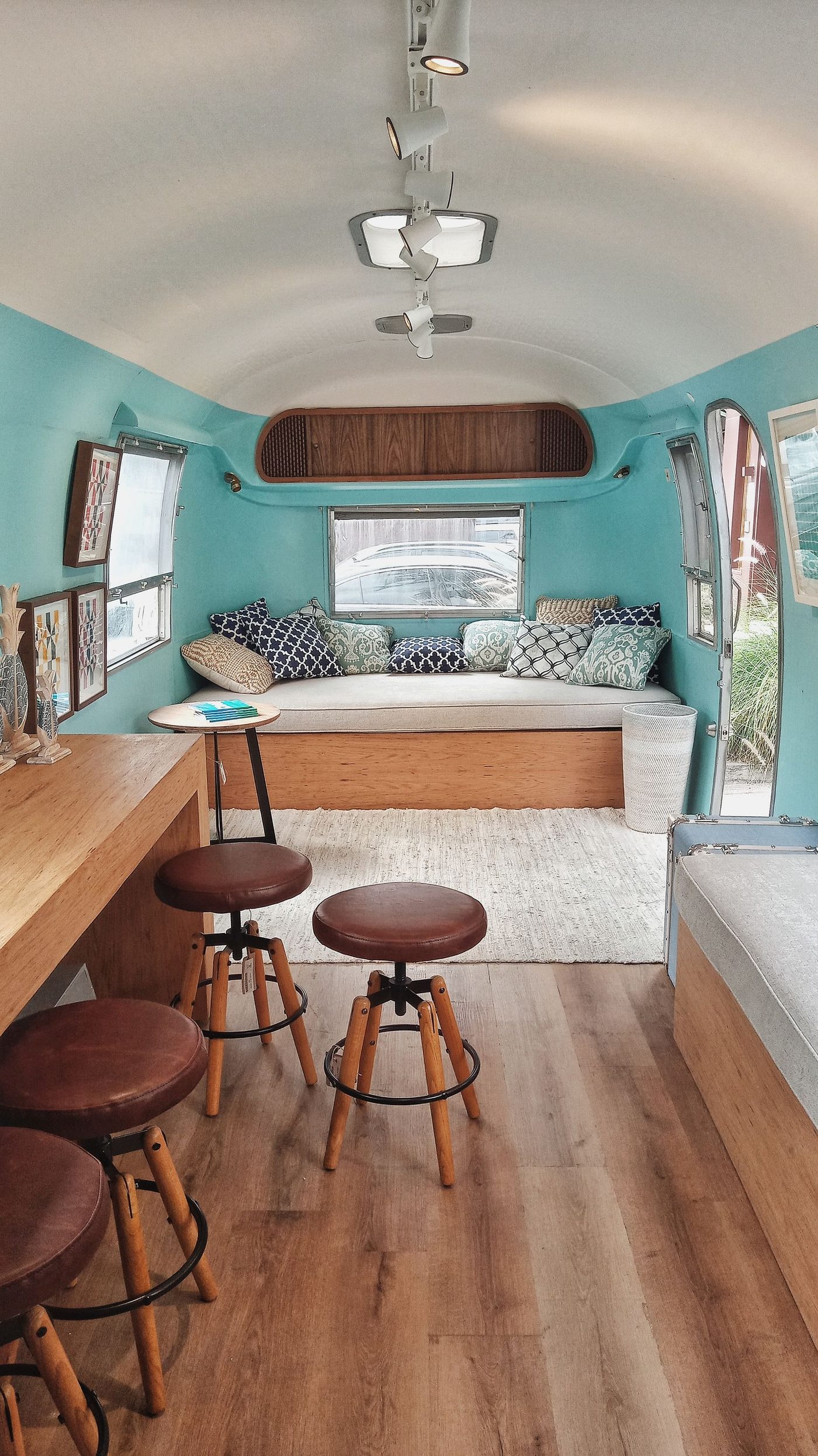
Paint and wallpaper are where every source on this topic agrees the money is best spent. A gallon of paint covers roughly 350 square feet, and most RVs have 500 to 1,000 square feet of interior wall and cabinet surface, so a full repaint needs 2 to 3 gallons of bonding primer at $50-$70 a gallon plus 2 to 3 gallons of finish paint at $30-$50 a gallon. Add sandpaper, brushes, and painter’s tape, and a full-interior DIY paint job runs roughly $300 to $500 in materials. Peel-and-stick wallpaper for an accent wall costs $0.50 to $5 per square foot if you want pattern instead of a second color of paint.
Multiple real projects land right in this range. One couple’s full Class C motorhome refresh, paint, new curtains, and vinyl flooring to replace worn carpet, came in around $500. A 2017 Jayco Pinnacle owner spent $600 total painting cabinets and building custom lightweight interior doors that cut 150 pounds off the rig. New hardware (cabinet pulls, hinges, drawer slides) typically adds $50 to $150 to a cosmetic refresh and is one of the cheapest ways to make painted cabinets look intentional rather than like a paint job.
What a mid-level DIY remodel costs
Once flooring, cushions, or a countertop swap enter the project, budgets move into the $1,500 to $4,500 range for most owners doing their own labor. A 2016 Grand Design Reflection fifth-wheel remodel that included wall and cabinet painting, new window treatments, hardware, and living-area furniture came to $2,500. A 1999 Fleetwood Angler truck camper remodel with painted walls and cabinets, a new backsplash, new flooring, and an epoxy bathroom refinishing kit also landed at $2,500. A 2010 Keystone Cougar owner who added vinyl flooring, custom dual-desk cabinetry with epoxy countertops, and new living room furniture spent $3,500.
Flooring materials at this tier run $1 to $2 per square foot for DIY vinyl sheet, or $2 to $3 per square foot for click-lock vinyl plank. Reupholstery is the wildcard: DIY material costs for a basic 4-cushion dinette set (fabric and lauan backing board) run $50 to $150, but that assumes you’re comfortable sewing your own covers. Ordering custom-sewn covers without doing the sewing yourself runs $150 to $300 for a full dinette set, a reasonable middle path between full DIY and a shop.
What countertops actually cost by material
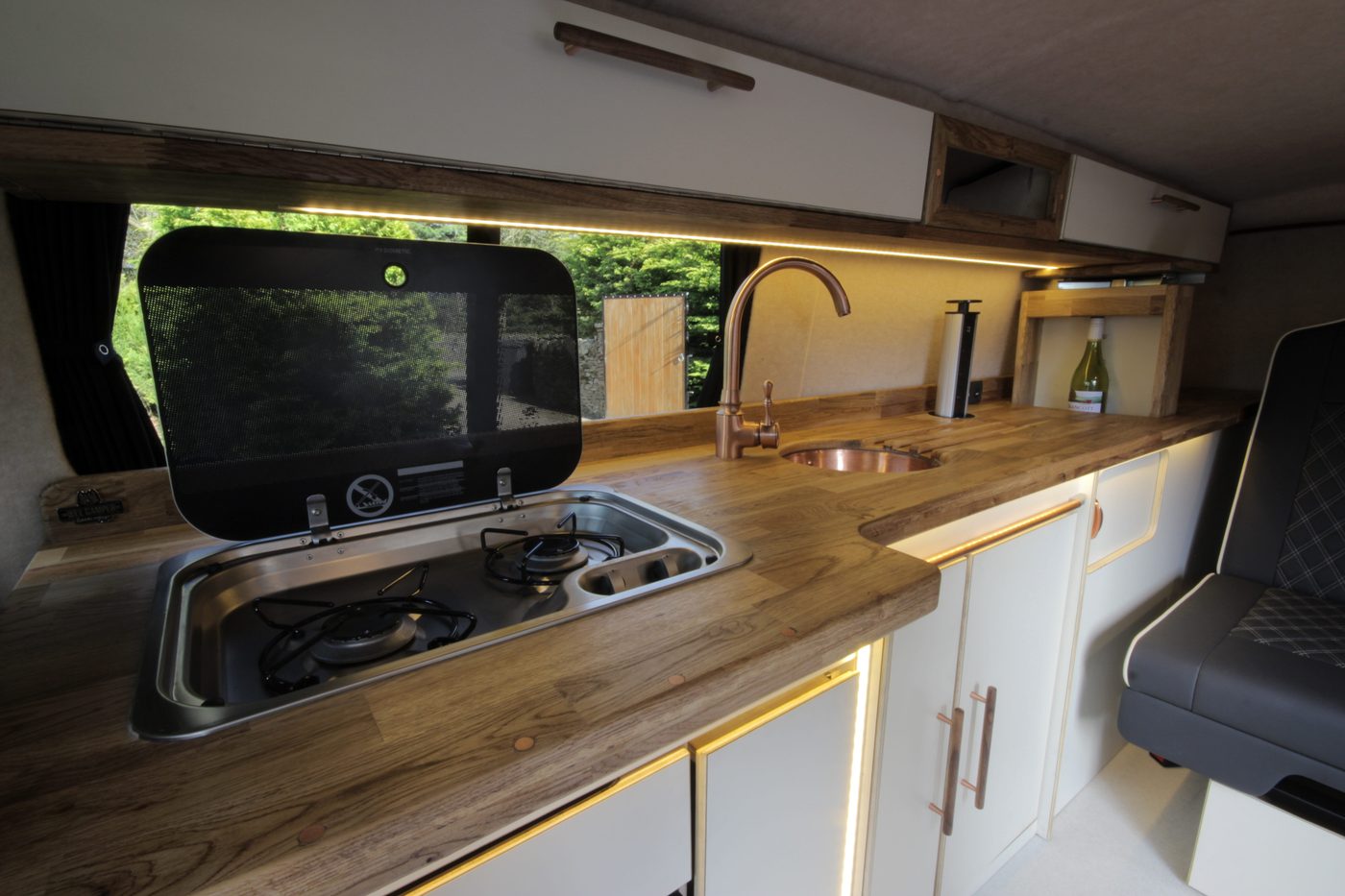
Countertop material choice swings cost more than almost any other single decision in a kitchen or bath remodel. Laminate is the budget option, $50 to $500 for a small section in materials alone, or $20 to $80 per square foot fully installed. Solid surface material like Corian costs more but resists stains and is repairable if scratched or burned, running $60 to $130 per square foot installed. It holds up better than laminate to the humidity and temperature swings an RV kitchen sees.
Butcher block sits in between on price and reads as the most premium option. One fully documented RV kitchen remodel used an 8-foot section of unfinished birch, 1.5 inches thick and 30 inches wide, that cost $259 on its own. The complete project, including a new sink, faucet, and plumbing supplies, totaled $530. Butcher block needs periodic resealing to keep water from swelling the wood at the sink cutout, a maintenance cost laminate and solid surface don’t carry.
What cabinet work costs, painted vs. refaced vs. replaced
DIY cabinet painting is one of the best-value projects in any RV remodel: $200 to $500 in materials for primer, cabinet-grade paint, and new hardware, done over a weekend or two. The technique matters more than the budget here. Cabinets are almost always laminate or thermofoil, which needs a bonding primer made for slick surfaces, not a standard wall primer, or the finish chips within a season.
Hiring the work out costs considerably more. General cabinet-painting contractors, working from house-kitchen pricing since RV-specific shop rate sheets are scarce, charge $30 to $60 per linear foot or $70 to $125 per door and drawer for professional spray-finish work. That adds up fast: one iRV2-reported RV remodel paid roughly $8,000 for professional cabinet painting as part of a larger $27,000 project. Full cabinet refacing with new doors, rather than just paint, runs into the same $80 to $500 per linear foot range contractors quote for house kitchens, with solid wood doors at the top of that range and laminate at the bottom.
What a full DIY overhaul or owner-managed renovation costs
Past $5,000, projects usually involve several categories at once: new flooring throughout, a countertop swap, custom furniture, and often an electrical or solar upgrade layered in. A 2002 Keystone Cougar remodel with new flooring, custom furniture, a pine countertop, new sink and backsplash, plus a battery, inverter, and solar installation came to $10,000. A 1999 Shasta Cheyenne Class C remodel, with a meaningful chunk of the budget set aside specifically for solar and power upgrades, came in under $8,000. A group remodeling a 2001 Coachman spent under $10,000 fixing a water-damaged wall, replacing furniture, installing a new A/C unit, updating flooring, and adding real tile backsplash and shiplap accents throughout.
At the top of the owner-managed range, a 2016 Thor Windsport Class C remodel with new countertops, backsplashes, custom lighting, upgraded flooring, and cabinet and wall painting throughout ran $20,000. These larger projects mix real DIY labor with hired help for the parts that punish mistakes most, cabinet spray finishing and upholstery being the two most commonly hired out even by otherwise DIY-heavy owners.
What a full gut renovation or shop turnkey package costs
At the far end, two different paths both land in the $15,000 to $28,000-plus range, for different reasons. The first is a full gut renovation done mostly by the owner but with structural or cosmetic work extensive enough that it becomes a second full-time job for weeks. One iRV2 poster bought an Argosy for $700 and originally estimated a $12,000 restoration; it ended up costing closer to $25,000, entirely in owner labor and materials, once the real scope of the project became clear.
The second path is paying a shop for a complete turnkey package. One California RV shop prices a full interior remodel, flooring, ceiling upholstery, cabinet and wall painting, new ceiling lights, cushion and window frame textile upholstery, dinette table renewal, and curtains, at flat rates by RV length: $15,000 for a 20-foot rig, $18,000 at 25 feet, $21,000 at 30 feet, $25,000 at 35 feet, and $28,000 for a 40-footer. That per-length scaling shows up consistently: the same shop’s flooring-only pricing roughly doubles from a 20-foot to a 40-foot rig too, since both labor hours and material quantity track directly with interior length.
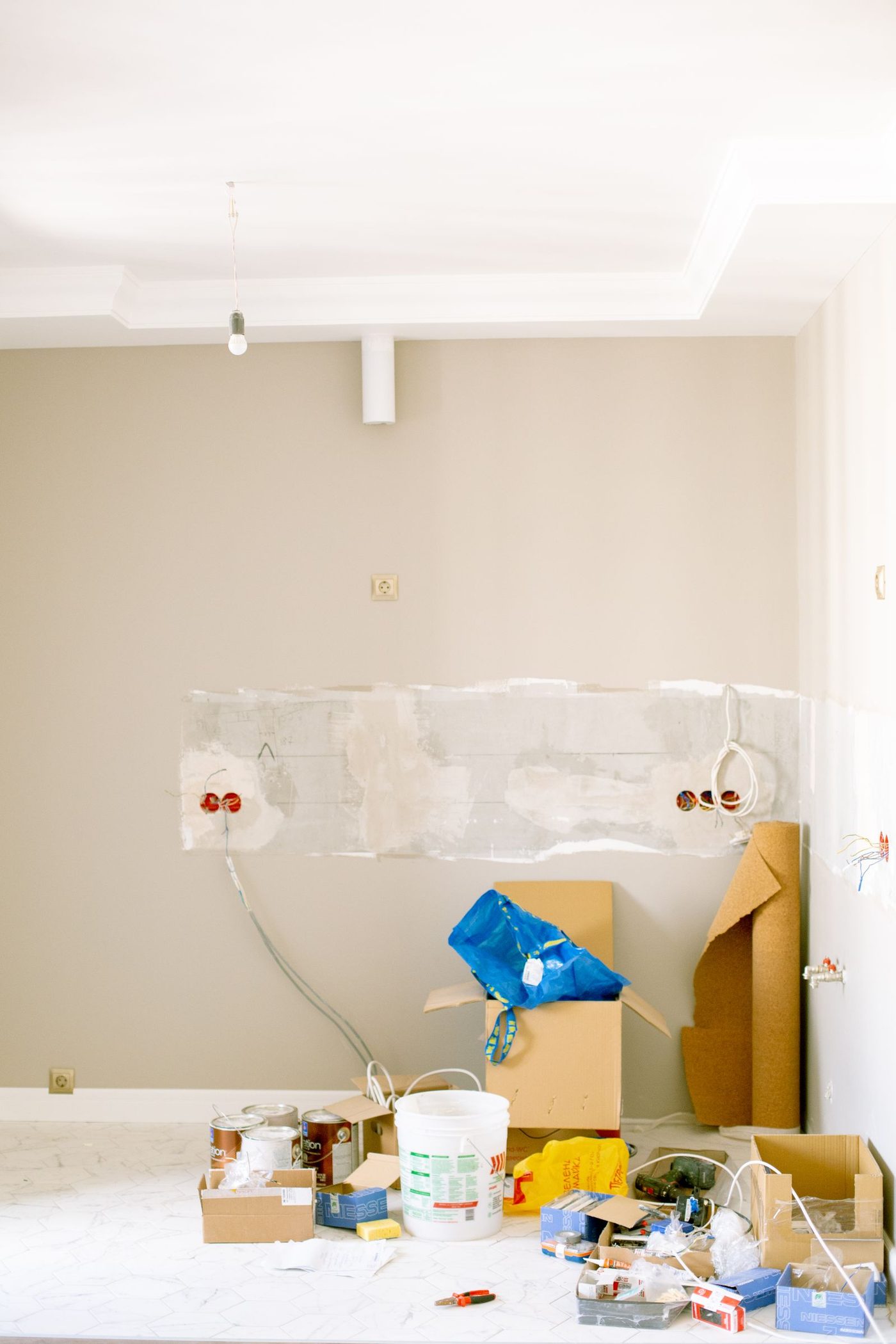
DIY vs. hiring it out, category by category
The honest middle path most owners with documented budgets actually take isn’t all-DIY or all-professional. It’s doing the cheap, forgiving categories yourself and paying for the two that are genuinely hard to get right without practice.
Paint, hardware, and curtains: do it yourself. The skill floor is low, the cost is low, and a mistake is easy to fix with another coat. Flooring: also a strong DIY candidate, especially click-lock vinyl plank, which tolerates minor subfloor imperfections and doesn’t require special tools.
Countertops: DIY-friendly if you’re comfortable with a circular saw and a jigsaw. Butcher block and laminate are both straightforward once measured correctly; the main risk is cutting the sink hole wrong.
Cabinet painting and upholstery: this is where hiring out earns its cost. A spray-booth cabinet finish is difficult to match with a brush or a rented sprayer, and reupholstery needs pattern-making skill and a heavy-duty machine most owners don’t own. These two categories are the ones owners who did everything else themselves most often report paying a shop for.
How this connects to other repairs
A remodel and a repair aren’t the same project, but they overlap more than owners expect. If the reason you’re remodeling is that the floor is soft or stained, check the floor repair cost guide first, since subfloor rot changes the whole scope and budget of a flooring project. If water got into the walls at some point, the water damage repair guide covers what remediation costs before any new finish material goes back in, and skipping that step is how a $2,500 flooring job turns into a $6,000 mold problem two years later.
Solar and power upgrades show up inside a lot of the larger remodel budgets in this guide, not as an afterthought but as a planned part of the project since the walls and cabinets are already open. If that’s part of your plan, the solar panel installation cost guide breaks down what a battery bank and inverter add on top of the interior work itself.
How to keep a remodel budget from running away
Set aside 15 to 20 percent of the budget for surprises before starting. Nearly every real project in this guide that ran past its original estimate did so because of something found once the old material came out, water staining under a countertop, a soft spot under flooring that wasn’t visible before demo, wiring that didn’t match what a diagram promised. That’s not bad planning. It’s what happens when you open up a 20-year-old interior.
Sequence the work so cosmetic decisions happen last. Paint color and cushion fabric are the fun parts, but doing them first means repainting around a flooring installer’s boots or protecting new upholstery during a countertop swap. Flooring and any structural or electrical work go first; paint, hardware, and soft furnishings go last.
If the RV’s resale value is a consideration, a rough rule several owners apply is capping total remodel spend at around 30 percent of the rig’s current market value. Past that point, a full gut renovation on an older unit can cost more than a comparable newer rig with a factory interior already in decent shape.
What drives the price
| Cost factor | How it moves the price |
|---|---|
| Scope: cosmetic refresh vs. full gut | A paint-only weekend project and a full structural remodel share a name and nothing else in cost. Multiple owners have remodeled a Class C motorhome for around $500 doing nothing but painting, sewing curtains, and swapping carpet for vinyl. On the other end, a 2004 Monaco Windsor renovation reported on iRV2 ran about $27,000 over seven weeks, with roughly $8,000 of that going to professional cabinet painting alone. The number you land on depends entirely on which of those two projects you're actually doing. |
| Paint and wallpaper materials | Most RVs have 500-1,000 square feet of interior wall and cabinet surface. A gallon of paint covers roughly 350 square feet, so a full repaint needs 2-3 gallons of bonding primer at $50-$70/gallon and 2-3 gallons of paint at $30-$50/gallon, plus about $100 in sandpaper, brushes, and tape. That puts a DIY full-interior paint job at roughly $300-$500 in materials. Peel-and-stick accent wallpaper runs $0.50-$5 per square foot for owners who want pattern without a paint sprayer. |
| Flooring choice and installation method | DIY vinyl sheet flooring runs $1-$2 per square foot in materials; click-lock vinyl plank runs $2-$3 per square foot. A California RV shop's price list for professional flooring installation (labor and materials included) runs $3,800 for a 20-foot rig, $4,500 at 25 feet, $5,300 at 30 feet, $6,200 at 35 feet, and $7,700 at 40 feet for vinyl panels; carpet is roughly half that at each length, and linoleum sits in between. Removing old tile flooring before the new material goes down adds a $1,200 surcharge at that same shop. |
| Cabinet treatment: paint vs. reface vs. replace | DIY cabinet painting on an RV's kitchen and bath cabinetry typically runs $200-$500 in materials, mostly bonding primer, cabinet-grade paint, and new hardware. Hiring it out costs more: general cabinet-painting contractors price professional work at $30-$60 per linear foot or $70-$125 per door and drawer, and one iRV2-reported RV remodel paid roughly $8,000 for professional cabinet painting alone as part of a larger project. Full cabinet replacement or refacing with new doors runs well past painting, into the same $80-$500-per-linear-foot range general contractors quote for house kitchens. |
| Countertop material | Laminate is the budget option at $50-$500 for a small section in materials, or $20-$80 per square foot installed. Solid surface material like Corian runs $60-$130 per square foot installed and holds up better to RV moisture swings. Butcher block sits in between on price and looks premium: one documented RV kitchen remodel used an 8-foot, 1.5-inch-thick birch butcher block slab that cost $259, with the full kitchen project (countertop, new sink, faucet, and plumbing supplies) totaling $530. |
| Upholstery and cushion work | Reupholstery fabric runs $25-$70 per yard depending on grade. Professional shops charge $150-$500 per cushion for labor alone, not counting fabric, which puts a full dinette reupholster at a shop in the $800-$3,000-plus range. DIY material costs for a basic 4-cushion dinette set, fabric and lauan backing board, run $50-$150; ordering custom-sewn covers without doing the labor yourself lands in between at roughly $150-$300 for a full dinette set. |
| DIY labor vs. hired trades vs. full shop package | A shop's complete turnkey interior package, covering flooring, ceiling upholstery, cabinet and wall painting, new ceiling lights, cushion and window textile work, dinette table renewal, and curtains, is priced by one California RV shop at $15,000 for a 20-foot rig, scaling up to $28,000 for a 40-footer. Owners who do most of the labor themselves and hire out only the specialized parts (professional cabinet painting, upholstery, electrical) report landing in the $8,000-$20,000 range for a comparable scope. Purely owner-labor projects with modest material choices routinely come in under $3,000. |
| RV length | Every per-square-foot and per-linear-foot cost above scales directly with rig size. The same shop's flooring and full-remodel pricing both roughly double from a 20-foot travel trailer to a 40-foot fifth wheel or Class A, since both labor hours and material quantities scale with the length of the interior being worked. |
DIY or hire a pro?
- Cost
- $300-$20,000+ depending on scope, from a paint-and-hardware refresh to an owner-managed renovation with new flooring, cabinets, and reupholstered cushions
- Time
- A weekend for paint, curtains, and hardware; 1-3 weeks for a full flooring-and-cabinet overhaul; 4-8 weeks for a large-scale renovation done around a work schedule
- Skill
- Beginner for paint, hardware, and curtains; intermediate for click-lock flooring and cabinet painting; advanced for countertop fabrication, cabinet replacement, and any electrical work tied into the remodel
Paint, hardware swaps, and curtains are the highest-return, lowest-skill projects in an RV remodel; multiple owners report a full interior refresh under $1,000 doing nothing else. Click-lock vinyl plank flooring is genuinely approachable on a weekend. Cabinet painting takes more patience than skill: proper degreasing, a bonding primer made for laminate, and two coats of cabinet-grade paint are what separate a durable finish from one that chips within a season. Butcher block and laminate countertops are straightforward carpentry: cut, seal, screw down from underneath. Where DIY gets harder fast is reupholstery, which needs a heavy-duty sewing machine and pattern-making skill most owners don't have, and anything that touches the RV's 12V wiring for new lighting.
What you'll need
- Bonding primer for laminate cabinets and RV walls (affiliate)
- Click-lock luxury vinyl plank flooring (affiliate)
- Butcher block countertop slab, unfinished birch (affiliate)
- Marine-grade upholstery fabric, per yard (affiliate)
As an Amazon Associate, we earn from qualifying purchases.
- Cost
- $15,000-$28,000+ for a shop's complete turnkey interior package on a 20-40 ft rig; $8,000-$27,000+ reported for owner-managed renovations that mix DIY labor with hired specialty trades like cabinet painting and upholstery
- Time
- 1-3 weeks at a shop for a full package; owner-managed projects mixing DIY and hired trades commonly run 4-8 weeks depending on scheduling around the hired specialists
- Booking
- Worth paying for on cabinet painting (spray-booth finish quality is hard to match with a brush), upholstery (fabric and pattern work), and any project involving a full layout change or new electrical runs
A shop's flat per-length pricing for a complete remodel package folds together labor, material sourcing at wholesale, and coordination across trades that would otherwise mean scheduling a flooring installer, a painter, and an upholsterer separately. That coordination is most of what the premium buys. For a partial remodel, hiring out just the parts that punish mistakes, cabinet spray-painting and cushion reupholstery, while doing flooring, hardware, and paint prep yourself, is the middle path most owners who report real numbers actually take. It keeps the finish quality high on the two things a rushed DIY job usually looks worst on, without paying full shop labor for the easy parts.
Will insurance or a warranty cover it?
- This is usually out of pocket. Standard policies treat it as wear and maintenance. A service contract bought before it fails is the main way to shift the risk.
An interior remodel is a cosmetic and lifestyle upgrade an owner elects to do, not a repair to a failed component, so it falls outside both standard RV insurance and extended service contracts by definition. Insurance covers damage from a covered peril (fire, collision, storm intrusion); it does not cover the cost of choosing new flooring or cushions. Extended warranty mechanical breakdown coverage is written around factory-installed systems failing, not an owner's decision to repaint cabinets or reupholster a dinette. The one place these costs can become relevant to coverage is after a covered loss: if a fire or water event forces a genuine repair, that repair is covered, but any upgrade beyond restoring the original condition, better flooring, a nicer countertop, is the owner's cost to absorb on top of the claim.
Coverage depends on your policy and the cause of damage. Confirm specifics with your provider.