RV Solar Panel Installation Cost: What to Expect in 2026
RV solar installation costs $230 to $750 for a DIY panel-only kit, $1,200 to $4,800 for a complete DIY system with battery and inverter, or $3,000 to $12,000+ professionally installed. Here's what drives the range.

Typical cost
$230–$12,000
A panel-only DIY kit runs $230-$750; a complete DIY system with a battery bank and inverter typically lands $1,200-$4,800; full professional installation runs $3,000-$12,000+
Most people pay around
$2,200
Costs verified July 2026
RV solar installation costs $230 to $750 for a DIY panel-only kit (just panels, a charge controller, and mounting hardware), $1,200 to $4,800 for a complete DIY system that adds a lithium battery bank and an inverter, or $3,000 to $12,000-plus fully installed by a shop. The number that actually matters for your budget isn’t the panels. It’s whether you’re buying a battery bank and inverter along with them, since batteries alone can cost three to four times what the panels do.
Why “RV solar cost” means such different things to different people
Ask five RV owners what their solar system cost and you’ll get five wildly different numbers, and most of them aren’t lying, they’re just answering different questions. Someone who bolted a $265 Renogy 200W kit onto an existing battery bank spent $265. Someone who built a full off-grid system from scratch, panels, a 40A MPPT controller, a 200Ah lithium bank, and a 3000W inverter, is closer to $3,000-$4,500 in parts alone before a wrench turns.
Renogy’s own cost breakdown puts it plainly: batteries account for 40-55% of a complete system’s cost, panels are only 20-30%, and the rest splits between the controller, inverter, and installation labor. That ratio is the whole story. If your existing battery bank already does the job, solar is a cheap upgrade. If you’re building power storage from zero, solar is really a battery-and-inverter project that happens to include some panels.
What a panel-only kit costs: 200W vs. 400W vs. going bigger
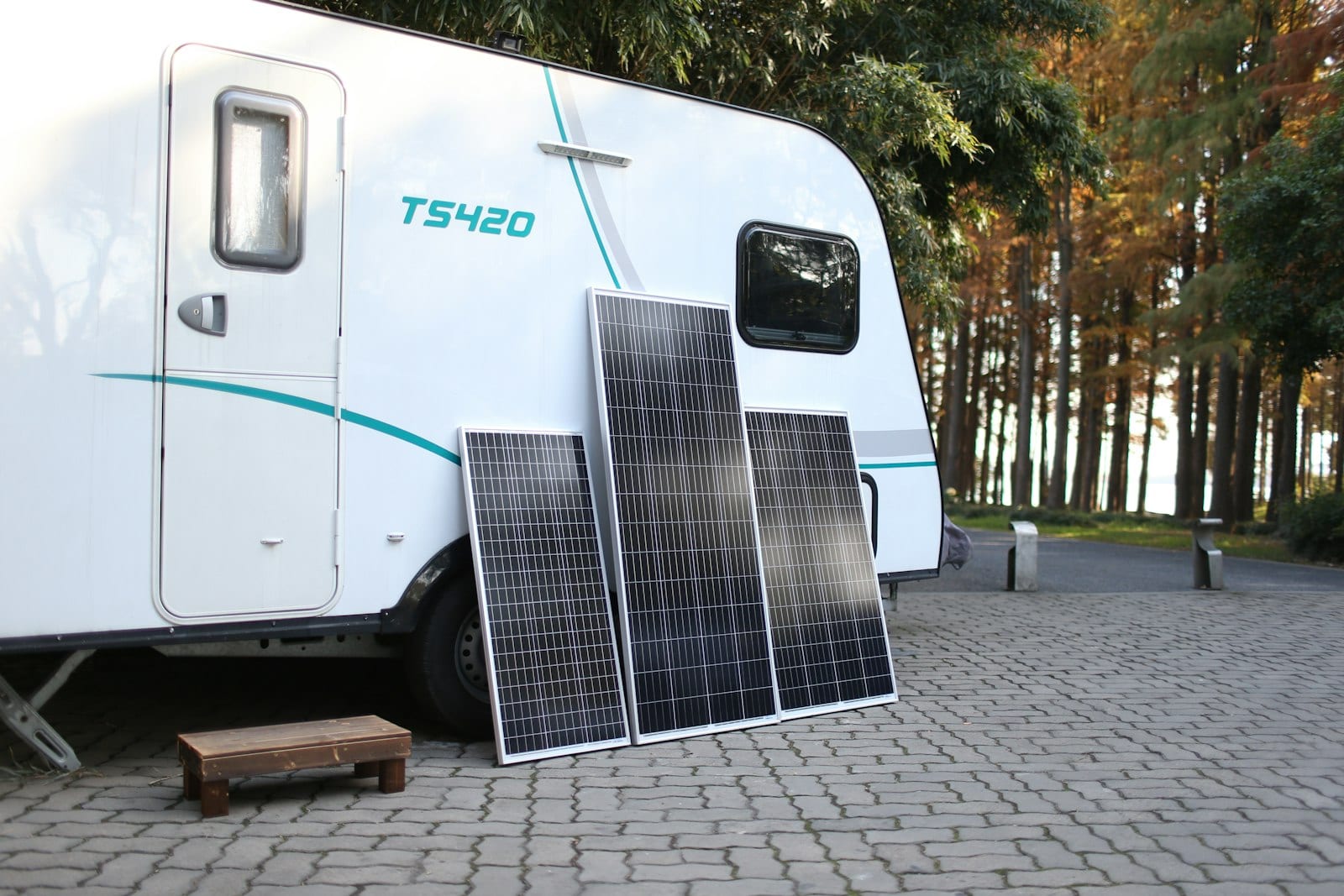
If you already have a working battery bank and just want to keep it topped off without running a generator, a panel-only kit is the cheapest way into solar. Renogy’s 200W kit, two 100W monocrystalline panels, a 30A PWM controller, mounting brackets, and wiring, runs $265 to $290 depending on the retailer. Step up to their 400W kit with the same PWM controller and the price roughly doubles to $470-$480, which tracks: two more panels, more mounting hardware, longer wire runs.
| System size | What’s included | Typical DIY kit cost |
|---|---|---|
| 200W (2x100W panels) | Panels, 30A PWM controller, brackets, wiring | $265-$290 |
| 400W (4x100W panels) | Panels, 30A PWM controller, brackets, wiring | $470-$480 |
| 400W with MPPT upgrade | Same panels, 40A MPPT controller instead of PWM | $600-$700 |
| 600-800W | Panels only, controller and mounting sold separately or bundled at the premium tier | $700-$1,000 in panels alone |
Individual 100W panels run about $110-$160 bought separately, so scaling past a pre-bundled kit is mostly arithmetic: more panels, plus whatever controller size the array actually needs. A 400W array through a 30A PWM controller is already pushing that controller’s limits; most owners going past 300-400W step up to a 40A MPPT controller anyway, which is where that $600-$700 estimate for an upgraded 400W kit comes from.
PWM vs. MPPT: the controller decision that changes your budget
A PWM (pulse width modulation) controller is the budget option. It works, it’s simple, and at $30 to $90 for a 30A unit it’s hard to beat on price for a small single-panel setup with no shading. The catch is efficiency: PWM controllers essentially clamp the panel’s voltage down to match the battery, wasting some of what the panel actually produces.
An MPPT (maximum power point tracking) controller costs more, anywhere from $88 for a small 20A unit to $152-$206 for a 40A model like Renogy’s Rover, but it actively hunts for the panel’s optimal voltage and can pull up to 30% more usable power out of the identical panels. That difference matters more than the sticker price suggests once you’re past 300W, running panels in partial shade from a roof AC or vent, or wiring multiple panels in series. For a 200W single-panel setup with a clear roof, PWM is a reasonable place to save $100-plus. For anything bigger, the MPPT upgrade usually pays for itself in the panels you’re no longer wasting.
What a complete system actually costs once the battery goes in
This is where the real money is. Take that same 400W panel kit and add one lithium battery plus an inverter, and the total jumps from $475-$700 to roughly $1,200-$2,200.
Battery pricing varies enormously by chemistry and brand. A budget 100Ah LiFePO4 (lithium iron phosphate) battery starts around $280-$310. Battle Born, the brand most full-timers gravitate toward, sells its 100Ah battery for $799 on sale ($949 regular) and backs it with a 10-year warranty, one of the longest in the industry. A 200Ah bank runs roughly $650-$654 in Renogy’s budget lineup, or $1,600-plus if you’re building it from two Battle Born units.
Inverters add another line item, and only if you actually need one. A solar array charging a 12V battery bank that just runs lights, the water pump, and USB charging doesn’t need an inverter at all, the DC power goes straight to those loads. The moment you want to run something that plugs into a wall outlet, a coffee maker, a laptop charger, a residential-style fridge, you need a pure sine wave inverter. A 2000W unit runs $286-$300; a 3000W unit, sized for heavier draws, runs $800-$825.

Owner reports on iRV2 back this up closely. One thread lays out a build with two 100Ah batteries and two 375W panels landing around $1,400 total, right in the middle of the complete-system range above. Another owner’s full 1,200W, 400Ah, 3,000VA inverter build ran $7,000 after mounting hardware and misc wiring, which sits well above the 600-800W tier here because it’s a genuinely bigger system than most single-axle trailers or truck campers need.
What professional installation actually costs
Handing the whole job to a shop changes the math because labor and wholesale component pricing both get folded in. Industry pricing guides put a straightforward 200-300W system with a modest battery at $3,000-$5,000 installed. A 400-600W system with a real lithium bank runs $5,000-$8,000. Push past 800W with a large battery bank and pure sine inverter and installed pricing runs $8,000 to $12,000 or more.
Labor alone runs $100-$150 an hour at most mobile techs and dealer service departments. A basic 400-600W panel-and-controller job takes 6-12 hours of shop time, $600-$1,800 in labor. A full off-grid conversion, new battery bank, inverter, transfer switch, and all the wiring that connects them, runs 10-20-plus hours and can push labor costs alone to $1,500-$6,000 depending on complexity.

That price gap between DIY and professional isn’t pure markup. Shops buy lithium batteries and MPPT controllers at wholesale, which offsets some of the labor cost on bigger systems, and they pressure-test every wire connection and roof seal before signing off. For a full off-grid conversion involving a big battery bank, that’s not nothing: a loose lug on a lithium pack pulling real amperage is a legitimate fire risk, not a hypothetical one.
Can you install RV solar yourself?
For a panel-only kit on an accessible roof, yes, and plenty of owners do it in a weekend. The job is mostly mechanical: mark your panel layout to avoid AC units, vents, and antennas, drill the mounting holes, seal every hole with butyl tape and Dicor self-leveling lap sealant before the bracket ever touches the roof, run the wire through a cable entry gland, and wire it to a charge controller connected to your existing battery. None of that requires an electrician’s license, though it does require patience with a caulk gun.
Adding a battery bank and inverter is a bigger step up in difficulty. Lithium batteries pull real amperage, which means wire gauge and fusing have to be sized correctly on every leg of the circuit, not just close enough. An inverter that shares a circuit with shore power needs a transfer switch wired so the two never energize the same line at once. Get any of that wrong and you’re not looking at a warranty claim, you’re looking at a fire. If the wiring plan involves anything past “panel to controller to existing battery,” it’s worth at least having a mobile tech check the work before it’s buttoned up behind panels.
What actually drives the cost up
Roof obstructions are the most common budget surprise. Air conditioners, vents, and antennas don’t just eat usable panel space, they force awkward layouts and longer wire runs that add labor time regardless of whether the array itself is 200W or 800W. Older rigs sometimes need an electrical panel upgrade or new wire runs to the battery compartment before solar can even go in, a cost line that rarely shows up in online kit pricing and often only surfaces once a shop actually looks at the rig.
Battery chemistry and bank size remain the single biggest lever, more than panel count, controller type, or even labor. A rig that needs 400Ah of lithium storage for extended boondocking is going to cost more in batteries alone than most owners spend on their entire panel array.
Does insurance or an extended warranty cover a solar system?
Almost never, and the reason is straightforward: solar is nearly always an aftermarket addition, not something the manufacturer installed. Extended warranty mechanical breakdown coverage is written around factory-installed components, so a solar system you added yourself typically falls outside the contract entirely, regardless of what it cost. The one exception is a newer rig that shipped with factory solar prep or panels as a listed build option; in that case, a failed factory-installed controller or wiring harness may fall under the same mechanical breakdown terms that cover other electrical systems. Check the extended warranty cost guide for how those contracts typically define “covered” components.
Standard RV insurance treats a solar system the same way it treats any other aftermarket upgrade: excluded by default. If you’ve put $2,000-$4,000 into a lithium system, it’s worth calling your insurer to schedule it as a rider, the same way you’d schedule an expensive piece of jewelry, rather than assuming a standard policy pays out after a covered fire or collision loss.
How solar cost compares to other RV systems
A complete DIY solar-and-battery system sits in a similar range to a full lithium battery conversion, which makes sense since the battery bank is doing most of the cost work in both cases. The battery replacement guide covers what a standalone lithium upgrade runs on its own, from $280 for a single budget cell to $6,000 for a full off-grid bank. The generator repair guide is worth a look too if solar is being weighed as a generator alternative: a mid-life generator repair runs $400-$1,200, roughly the same territory as a panel-only solar kit with a battery upgrade, but solar has no fuel cost and nothing to service every 100 hours.
The converter replacement guide covers the other half of most rigs’ 12V charging picture, the component that charges the battery bank from shore power rather than sunlight. Most complete solar builds leave the converter in place and add solar as a second charging source, not a replacement for it.
What drives the price
| Cost factor | How it moves the price |
|---|---|
| Panel-only kit vs. a complete off-grid system | A Renogy 200W kit (two 100W panels, a 30A PWM controller, mounting brackets, and wiring) runs $265-$290 on its own. Add a lithium battery, an inverter, and the fuses and wire needed to tie it all together, and the same 400W footprint climbs to $1,200-$2,200. Most of what people mean by 'RV solar system cost' is really battery and inverter cost, not panel cost. |
| Charge controller type: PWM vs. MPPT | A basic PWM controller runs $30-$90 and works fine on a small, single-panel setup with no shading. An MPPT controller costs more, $88-$205 for a 20-40A unit, but pulls up to 30% more usable power out of the same panels, which matters once you're past 300W or dealing with partial roof shade from an AC unit or vent. |
| System wattage and roof space | A 100W panel runs roughly $110-$160 on its own. Renogy's complete 200W kit runs $265-$290; the 400W version with a PWM controller runs $470-$480, and swapping in a 40A MPPT controller pushes that same 400W kit to roughly $600-$700. Bigger arrays also mean more mounting brackets, more sealant, and longer wire runs back to the battery bank, all of which add labor time even on a DIY job. |
| Battery chemistry and bank size | This is the single biggest lever on total cost. A budget 100Ah lithium battery starts around $280-$310; a premium 10-year-warrantied Battle Born 100Ah runs $799-$949. A 200Ah bank in Renogy's lineup runs roughly $650, and a 300Ah bank runs roughly $880. Two Battle Born batteries for a 200Ah bank push $1,600-$1,900 on their own, before a single panel is mounted. |
| Inverter size, and whether you need one at all | If solar only needs to charge a 12V battery bank that runs lights, fans, and a water pump, no inverter is required at all. Add a coffee maker, a laptop charger, or a residential fridge, and a pure sine wave inverter becomes necessary: a 2000W unit runs $286-$300, a 3000W unit runs $800-$825. Undersizing the inverter for a big residential appliance is a common and expensive mistake. |
| DIY vs. professional labor | Mobile RV techs and dealer service departments both charge in the $100-$150/hr range for solar work. A straightforward 400-600W panel-and-controller install runs 6-12 hours of shop time, $600-$1,800 in labor alone. A full off-grid conversion with a new battery bank, inverter, and transfer switch runs 10-20+ hours, pushing labor costs to $1,500-$6,000 on top of parts. |
| Roof obstructions and existing electrical setup | Air conditioners, vents, and antennas eat into usable roof space and force awkward panel layouts, adding labor time regardless of system size. Older rigs sometimes need electrical panel upgrades or new wire runs to the battery compartment before a system can go in at all, which is a cost line a lot of first-time buyers don't budget for until a shop flags it. |
DIY or hire a pro?
- Cost
- $230-$4,800 depending on scope, from a bare panel-and-controller kit to a full battery-and-inverter system
- Time
- A weekend for a panel-only kit on an accessible roof; 2-4 days for a complete system with battery wiring and an inverter tie-in
- Skill
- Beginner for a panel-only kit; intermediate to advanced once a battery bank, DC-DC charger, or inverter enters the wiring
A panel-only install is mostly mechanical: drill mounting holes, seal them with butyl tape and Dicor lap sealant, bolt down the brackets, run the wire through a cable entry gland, and connect it to a charge controller wired to the existing battery. That part is genuinely approachable for anyone comfortable on a ladder. Adding a battery bank and inverter is a different job entirely: it means sizing wire gauge correctly for the amperage, fusing every leg of the circuit, and wiring a transfer switch if the inverter needs to share a circuit with shore power. Get the wire gauge wrong on a high-amperage lithium bank and you've built a fire hazard, not a power system.
What you'll need
- Renogy 200W 12V Solar RV Kit (two 100W panels, 30A PWM controller, wiring) (affiliate)
- Renogy Rover 40A MPPT charge controller (upgrade from PWM) (affiliate)
- Battle Born 100Ah 12V LiFePO4 battery (10-year warranty)
- Renogy 2000W pure sine wave inverter (affiliate)
As an Amazon Associate, we earn from qualifying purchases.
- Cost
- $3,000-$12,000+ installed, driven mostly by battery bank size and inverter capacity rather than panel count
- Time
- 1-2 days for a straightforward panel-and-controller add-on; up to a week for a full off-grid conversion with new wiring runs
- Booking
- Worth the money for full off-grid conversions, for roof penetrations on a rig still under a manufacturer roof warranty, and for any job that ties a new battery bank into an inverter and transfer switch
A shop earns its fee mostly on the electrical side: correct wire gauge and fusing for a lithium bank pulling real amperage, a pressure-tested roof seal that won't leak two seasons from now, and a transfer switch wired so the inverter and shore power never fight each other. Professional installers also buy panels, controllers, and batteries at wholesale, which partly offsets the labor markup on bigger systems. It's the right call if the RV is still under a factory roof warranty (a botched DIY roof penetration can void it) or if the system includes a battery bank large enough that a wiring mistake becomes a real fire risk.
Will insurance or a warranty cover it?
- An extended warranty or service contract may cover this if the failure is mechanical and the component is listed in your plan.
- This is usually out of pocket. Standard policies treat it as wear and maintenance. A service contract bought before it fails is the main way to shift the risk.
Solar is almost always an aftermarket addition, not a factory-installed system, which puts it outside most RV extended warranty contracts entirely; mechanical breakdown coverage is written around components the manufacturer installed, not equipment an owner bolted on afterward. The exception is a rig that shipped from the factory with solar prep or panels as a listed option; in that case, a failed factory-installed panel, controller, or wiring harness may fall under the same mechanical breakdown terms that cover other electrical components. Standard RV insurance treats solar the same way it treats any other aftermarket upgrade: it's typically excluded unless it's specifically scheduled and valued on the policy, which is worth doing given how much a full lithium system can cost to replace after a covered loss like a fire or collision.
Coverage depends on your policy and the cause of damage. Confirm specifics with your provider.