RV Slide-Out Seal Replacement Cost: What to Expect in 2026
Replacing RV slide-out seals runs $60–$300 DIY or $300–$1,000 per slide at a shop. Here's what seal types cost, why DIY is realistic, and what skipping it actually costs you.
Typical cost
$60–$2,500
DIY seal material runs $60–$300 per slide; a shop charges $300–$1,000 per slide all-in; full coach (3–4 slides) at a dealer reaches $1,000–$2,500
Most people pay around
$350
Costs verified June 2026
Replacing the seals on a single RV slide-out costs $60–$300 in materials if you do it yourself, or $300–$1,000 at a shop for parts and labor combined. A full-coach seal job across three or four slides runs $200–$600 DIY or $900–$2,500 professionally. These numbers stay low specifically because seals are one of the few RV repairs where DIY is realistic and, on most systems, genuinely easy. The more important number is what a worn seal costs when you ignore it: subfloor rot from a slow leak routinely turns a $150 fix into a $2,000 floor repair.
What do RV slide-out seals actually do, and what types are there?
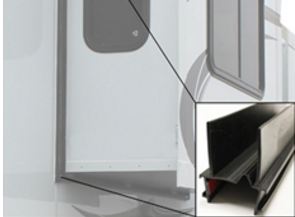
An RV slide room sits in a wall opening with a gap around all four edges. Seals bridge that gap, blocking rain, road spray, dust, insects, and cold air from entering through the sides of the room. They also prevent the slide mechanism from being exposed to grit and moisture during travel. When seals fail, the slide room stops being weatherproof and the RV’s wall framing starts absorbing moisture it was never designed to handle. The slide-outs section covers the full picture of how slide rooms are built and what can go wrong with them beyond seals.
Three main seal profiles appear on most RV slide-out systems.
| Seal Type | Profile | Primary Function | Typical Location | DIY Difficulty |
|---|---|---|---|---|
| Wiper seal | Flat flexible blade | Wipes the slide wall clean during extension and retraction | Top and sometimes sides | Easy; most are peel-and-stick |
| Bulb seal | Hollow tube | Compresses against the RV wall to create a watertight barrier when the slide is closed | Bottom and perimeter | Moderate; adhesive or clip-on |
| D-seal | D-shaped extrusion | Primary weather barrier; snaps into a base channel (two-piece systems) | Full perimeter on newer rigs | Moderate; base channel requires screws |
The distinction between two-piece and one-piece systems matters for cost. On a two-piece EK-style system (common on newer Lippert and similar slides), the base channel bolts to the wall permanently and only the D-seal insert needs periodic replacement. That insert swap costs $2–$6 per linear foot in parts and takes half the time of a full-assembly replacement. On older systems where the entire seal glues directly to the wall, you replace the whole piece at $4–$12 per foot.
What does seal replacement actually cost by scenario?
Material pricing from current suppliers (RecPro, United RV Parts, Steele Rubber) puts raw seal cost at $4.49–$12 per linear foot depending on profile. A typical mid-size travel trailer slide needs 20–35 feet of material per slide. A large fifth-wheel or Class A slide can require 40–60 feet.
DIY one slide: A single travel trailer or fifth-wheel slide with a simple wiper-and-bulb setup costs $60–$150 in seal material. More complex full-perimeter EK systems on a larger slide run $150–$300 in material. Add $15–$30 in lap sealant and adhesive. Total: $75–$330.
Shop one slide: Labor at an RV shop runs 1.5–3 hours per slide at $90–$175/hr depending on region. Parts at shop pricing add $80–$200. A compact travel trailer slide comes in around $300–$500 all-in; a large fifth-wheel slide or Class A slide runs $500–$1,000.
DIY full coach (three slides): Material for three slides totaling 70–100 feet costs $200–$450. Add adhesive, sealant, and a day of work. Total: $230–$500.
Shop full coach (three to four slides): $900–$2,500 depending on slide size, seal system, and whether the base tracks need replacement. Owner reports from fifth-wheel forums put multi-slide shop jobs from reputable independent shops at $1,000–$1,800 for typical rigs, with Class A work running higher.
How to recognize seal failure before it costs you more
The best time to find a failing seal is before any water has gotten in. Walk the outside of the rig with the slide extended and look for these:
Cracks or hardening. EPDM and TPE rubber that has spent years in direct sun becomes brittle and cracks perpendicular to its length. You can feel it: a healthy seal has give and springs back; a degraded seal feels stiff and resists compression.
Sections no longer touching the wall. Wiper blades that have curled away from the slide surface are not wiping anything. Bulb seals that have lost their round cross-section and gone flat have lost most of their compression.
Corner separation. Corners take the most abuse because the seal has to change direction and is cut and joined there. A corner pulling away from its miter joint is a direct water entry point.
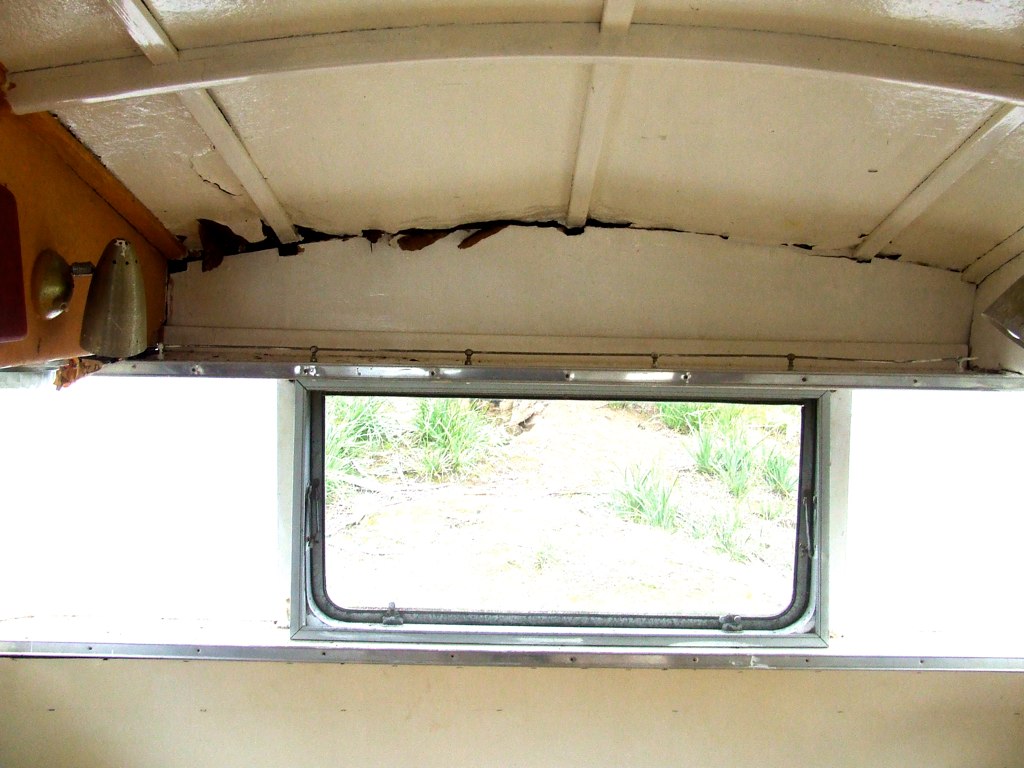
Interior evidence. Soft spots in the floor near the slide perimeter, staining on the wall trim just inside where the slide meets the main body, or musty smell after rain are all downstream symptoms of a seal that has been leaking for a while.
Most owners find seal problems during an annual spring inspection. Catching it then, with the floor still dry, keeps the job cheap. Catching it after the interior smells damp means pulling trim to check the substrate before pricing the seal replacement.
Why seals are excluded from every warranty
This is the coverage question that catches owners off guard. Slide-out seals are classified as wear items, the same category as brake pads, tires, and filters, and they are explicitly excluded from coverage under every factory warranty and virtually every extended service contract.
The exclusion is not ambiguous. Wholesale Warranties, one of the major warranty brokers in the industry, states it directly in their coverage documentation: weather stripping and unit seals will not be covered, regardless of the warranty provider. The reasoning is functional: seals have no mechanical or electrical purpose. They are stationary rubber pieces. Warranty plans are built around mechanical breakdown, and a gasket that has worn out from UV exposure and compression cycles does not fit that definition.
Factory warranties from major manufacturers follow the same logic. A seal that failed because of a manufacturing defect in its first months might be a warranty conversation, but a seal that has degraded over two or three years of use is not.
RV insurance works the same way here: it covers sudden, accidental damage, not the gradual wear that actually causes most seal failures. A tree branch tearing a seal off mid-storm is a covered event. A seal that hardened and cracked over three seasons in the sun is not, and that’s the far more common cause. For the full picture on what RV coverage includes and excludes, the warranty and insurance guide is worth reading before deciding whether to add an extended contract.
The prevention math: why $200 now beats $2,500 later
About a quarter of all RV water damage claims trace back to slide-out seal failure, according to repair industry data. The mechanism is straightforward: a seal loses compression, rain gets in, and the water reaches the OSB subfloor under the slide room. OSB is moisture-sensitive. Wet OSB does not dry and return to full strength; it swells, delaminates, and eventually rots.
Subfloor repair under a slide room requires removing the slide, cutting out and replacing the damaged substrate, treating any framing for mold, reinstalling the floor, and resealing everything. That job costs $1,500–$4,000 at most shops, not counting the mechanical work to remove and reinstall the slide itself.
The seal that preceded it? Often a $100–$200 piece of rubber that an owner could have replaced on a Saturday morning. This is not a hypothetical. It is the most common path to a large-dollar repair bill on any RV with slides, and it is entirely preventable by staying current on seal condition.
For the full scope of what water intrusion can cost once it reaches the structure, the RV water damage repair guide covers that territory in detail.
DIY seal replacement: what the job actually involves
Most slide-out seal replacements follow the same basic sequence regardless of seal profile.
Extend the slide fully to give yourself access to the full seal perimeter. Remove the old seal by cutting it free at the corners, then pulling it away from the wall. If it was held by adhesive, a plastic scraper and mineral spirits or an adhesive remover remove the residue without gouging the wall surface. Metal scrapers leave marks; avoid them.
Clean the mounting surface until it is bare and dry. Adhesive-backed seals need a clean, slightly rough surface to bond well. Wipe down with isopropyl alcohol and let it fully dry before proceeding.
Install the new seal starting at one corner. For peel-and-stick seals, remove the backing tape and press firmly along the full length, working out bubbles as you go. For clip-on or press-in profiles, seat the full length before pressing the clips home. Miter the corners at 45 degrees for a clean joint, then apply a small bead of lap sealant over each corner joint.
Let adhesive cure for 24–48 hours before cycling the slide. Then run it in and out twice and check the contact impression: the seal should leave an even mark around the full perimeter. Any gaps are adjustment points before calling the job done.
For seal conditioner and UV protectant, Camco and 303 Aerospace both make products suitable for EPDM and TPE rubber. Applied twice a year, conditioner keeps the rubber supple and dramatically extends service life. A $12 can of conditioner applied on a spring afternoon is the cheapest maintenance item on any slide-out system. Expect 5 to 10 years of service from a well-conditioned EPDM seal; owners in the Southwest who park on bare desert with no shade often see that cut in half, seals cracking in 3 to 5 years from raw UV exposure alone.
When to call a shop instead of doing it yourself
The DIY case is strong for most seal types, but a few situations push the job toward professional service.
If the base channel on a two-piece system is corroded, bent, or has stripped screw holes, reinstalling a new channel requires drilling into the RV wall and properly sealing the new fastener penetrations. Done wrong, new penetrations become new water entry points. A shop with the right drill jigs and sealant experience is worth the cost here.
If you pull the trim and find soft subfloor, stop. What looked like a seal job has become a water damage repair. That scope change affects what needs to happen before any new seal goes on, and a shop can assess the substrate properly. The RV floor repair cost guide covers what subfloor work runs, and the RV water damage repair cost page has the broader picture if moisture has reached the walls or framing as well.
For adjacent mechanical work, if the slide-out motor is also due for replacement or the slide mechanism needs adjustment, combining both jobs at a shop on one service day saves mobilization cost compared to two separate visits.
And for the general overview of everything that can go wrong with a slide-out system beyond seals, the RV slide-out repair guide covers the full range of failure modes and their costs.
What drives the price
| Cost factor | How it moves the price |
|---|---|
| Seal profile and attachment method | Peel-and-stick wiper seals are the cheapest to source and install, running $4–$8 per linear foot. Press-in or clip-on bulb seals run $6–$12/ft. Full-perimeter EK-style base-and-D-seal systems from brands like AP Products or Jaeger cost $8–$15/ft for the base track alone plus the D-seal. A simple wiper replacement on a mid-size slide might need 20 feet of material; a full EK perimeter set on a large fifth-wheel slide can require 50–60 feet. |
| Number of slides and total linear footage | A rig with two travel-trailer slides might need 50–70 total feet of seal material. A four-slide Class A can require 150–200 feet across all openings. Material cost scales directly with footage; labor scales roughly the same way. Shops sometimes discount multi-slide jobs slightly but not proportionally, so DIY savings grow with each additional slide. |
| Whether the base track or just the seal insert needs replacing | Many RV slide systems use a two-piece design: a permanent base channel screwed to the wall and a replaceable rubber D-seal or wiper insert that snaps or slides into it. Replacing just the insert costs $2–$6/ft. Replacing the entire base-plus-seal assembly costs $8–$15/ft and takes 2–4 times longer to install. If the base channel is damaged or corroded, the whole-assembly cost applies. |
| Shop labor rate and region | RV shop labor runs $90–$130/hr in the rural Midwest and Southeast, $130–$225/hr in the Pacific Northwest, Mountain West, or Northeast. Seal replacement on a single mid-size slide typically takes 1.5–3 hours at a shop. A 2-hour job at $120/hr is $240 in labor before parts; the same job at $175/hr is $350. Dealer service departments consistently charge more per hour than independent shops. |
| Water damage found once the slide trim is pulled | A seal that has been leaking for one or two seasons often hides subfloor OSB that has absorbed moisture. Once the seal is pulled and the trim removed, even minor discoloration can mean $500–$2,000 in floor repair on top of the seal job. Catching a failing seal early, while the substrate is still dry, keeps the total bill at the low end. Waiting until water shows up inside multiplies the final cost by 3–10 times. |
| RV size and slide room dimensions | A small travel trailer with a single 8-foot kitchen slide needs far less material and far less labor than a 40-foot Class A with a 15-foot full-wall slide. Large slides also require more maneuvering time and sometimes a second technician to hold the seal while adhesive cures. Owner-reported shop quotes on Class A full-wall slides routinely run $600–$1,500 per slide versus $300–$600 for compact travel-trailer slides. |
| Seal age and adhesive condition | On seals installed with butyl tape or contact cement that has dried out and bonded to the wall, removal can add an hour or more of careful scraping. On newer or well-maintained seals that peel off cleanly, the job goes faster. Shops will sometimes quote a range rather than a flat rate for this reason. |
DIY or hire a pro?
- Cost
- $60–$300 in seal material per slide
- Time
- 2–5 hours per slide for most owners
- Skill
- Beginner to intermediate; peel-and-stick wiper seals are genuinely easy
Slide-out seal replacement is one of the most DIY-friendly jobs on an RV. Peel-and-stick wiper seals and adhesive-backed bulb seals require a putty knife, rubbing alcohol or mineral spirits, a utility knife, and patience. The two-part EK base-and-D-seal systems take more effort because the base track requires screws, but the process is still within reach for anyone comfortable on a ladder with basic hand tools. Seal material from suppliers like Steele Rubber, RecPro, or United RV Parts runs $4–$12 per linear foot depending on profile. A typical single slide needs 15–35 feet of material. The job pays for itself immediately compared to a shop quote.
What you'll need
- Peel-and-stick RV slide-out wiper seal (affiliate)
- RV slide-out bulb seal with adhesive
- Lap sealant for corners and joints (affiliate)
- Rubber contact cement or 3M trim adhesive (affiliate)
As an Amazon Associate, we earn from qualifying purchases.
- Cost
- $300–$1,000 per slide all-in; $900–$2,500 for full coach
- Time
- Same-day for one slide; 1–2 shop days for full coach
- Booking
- Get a written quote itemizing parts and labor hours before authorizing
Professional service makes sense when the slide trim involves screws the owner cannot access, when the base channel itself is damaged and must be removed and re-drilled, or when the job coincides with other shop work on the same haul. Shops also have alignment jigs that ensure even compression on new EK-style systems, which is difficult to confirm by hand. Mobile RV techs typically beat dealer rates for seal work by 20–30% and eliminate the scheduling wait.
Will insurance or a warranty cover it?
- This is usually out of pocket. Standard policies treat it as wear and maintenance. A service contract bought before it fails is the main way to shift the risk.
Slide-out seals and weatherstripping are explicitly excluded as wear items by virtually every factory warranty and extended service contract. Wholesale Warranties, one of the largest RV warranty brokers, states flatly: 'weather stripping and unit seals will not be covered, regardless of the warranty provider.' The reasoning is that seals are stationary items with no mechanical or electrical function, so they fall outside the mechanical-breakdown definition all warranty plans use. Factory warranties from Thor, Forest River, Keystone, and Grand Design follow the same pattern. The practical implication: seal replacement is a maintenance cost, not a warranty claim.
Coverage depends on your policy and the cause of damage. Confirm specifics with your provider.