Motorhome Roof Repair Cost: Class A, B & C Guide (2026)
Motorhome roof repair costs $300 to $8,500 for drivable coaches. Fiberglass crack repair, front cap seam leaks, AC reseal, and aluminum corrosion all price differently than trailer roofs.
Typical cost
$300–$8,500
Most motorhome owners pay $800–$3,000 for a professional roof repair; fiberglass crack work starts around $700 and a full reseal of a 40-foot Class A runs $1,800–$3,000
Most people pay around
$1,800
Costs verified June 2026
Most motorhome roof repairs run $800 to $3,000 at a professional shop. A full reseal of all seams and penetrations on a 40-foot Class A typically costs $1,800-$2,500. A fiberglass crack repair done by a specialist starts at $700 for a surface patch. What drives the bill past $4,000 is the same thing that drives it on any RV: water that found its way into the decking before the repair happened. Catch it early and the cost is manageable. Discover it two seasons late and you are funding a structural job.
Why motorhome roof repair costs more than trailer repair
Three things separate a motorhome roof repair from a travel trailer job.
First, size. A 40-foot Class A has roughly 400 square feet of roof and may carry three AC units, a heat pump, a solar array, multiple roof vents, and a cellular antenna. Every penetration is a potential leak source. A shop that charges $150/hr for labor is going to spend a meaningful amount of time just resealing flanges, not counting any actual damage repair.
Second, material. Most motorhomes carry a fiberglass or TPO-over-fiberglass roof. Fiberglass crack repair is not tape-and-sealant work. It requires gelcoat color-matching, resin application, and finish grinding. Shops that do it well charge accordingly, and there are far fewer of them than shops that handle EPDM rubber roofs. If you call an RV dealer and ask whether their service department does gelcoat work on Class A roofs, the honest answer from many of them is no.
Third, access. A 40-foot diesel pusher does not fit in a standard service bay. You need a shop with high bays and the right equipment, or a mobile tech who will climb up while the coach is parked. Mobile techs are convenient but not always the right call for fiberglass crack work that requires a controlled environment to cure properly.
Motorhome roof repair cost by repair type
What you actually pay depends on which specific repair your coach needs.
Seam and penetration reseal ($800-$2,500): This is maintenance, not emergency repair. All seams, lap caps, and penetration collars (around AC units, vents, antennas, and the front and rear cap seams) are cleaned and resealed. No membrane replacement, no decking work. A 27-foot Class C typically runs $800-$1,200. A 38-40 foot Class A with three AC units and a full complement of vents runs $1,800-$2,500.
Fiberglass crack or gelcoat repair ($700-$2,000): A single crack in a fiberglass panel gets cleaned, filled with resin or a fiberglass repair compound, and finished to match the surrounding gelcoat. Surface-only cracks run $700-$1,200. Deeper cracks that require a fiberglass mat layup, or repairs in visible locations where color match matters, push toward $1,500-$2,000 at a specialty shop.
Front or rear cap seam repair ($1,200-$4,000): The front cap seam on a Class A or the cab-over seam on a Class C is the highest-stress joint on the roof. When it opens, water often tracks forward or rearward before showing up inside. A shop will need to trace the entry point, treat the seam, and inspect adjacent areas for decking moisture. Add $400-$900 over a basic reseal for the cap-specific work.
Major structural repair ($4,000-$8,500): Widespread decking damage, multiple failed areas, or a deferred leak that reached the roof framing. At this scale, sections of the membrane come off, wet luan or OSB gets cut out and replaced, and the membrane is repaired or partially replaced. One Class C owner reported a full roof replacement after deferred water damage cost $5,258, including new decking and a PVC membrane.
Motorhome roof repair cost by class and material
The table below reflects professional repair costs for common scenarios across the three drivable motorhome classes.
| Coach Type | Roof Material | Full Reseal | Crack/Seam Repair | Decking Damage Repair |
|---|---|---|---|---|
| Class B (van) | Rubber or factory-coated metal | $300-$800 | $300-$700 | $1,500-$3,500 |
| Class C (27-32 ft) | EPDM rear + fiberglass cab | $800-$1,500 | $700-$1,800 | $2,500-$5,000 |
| Class A (34-40 ft) | One-piece fiberglass or TPO | $1,500-$2,500 | $800-$2,000 | $3,500-$8,500 |
| Class A diesel (40 ft+) | One-piece fiberglass | $2,000-$3,000+ | $1,000-$2,500+ | $5,000-$8,500+ |
Class B vans are the cheapest to reseal because the roof is small and simple. Class A diesel pushers are the most expensive because of sheer size and the fiberglass-specific skill required. A Class C falls in between, though the cab-over seam deserves its own budget line because it often needs attention independently of whatever the rubber roof section requires. Ask upfront whether the shop you’re calling actually handles fiberglass cab-over work; plenty of rubber-roof specialists don’t, and finding that out after the estimate wastes a service call.
The fiberglass vs. rubber repair difference
This distinction matters more on motorhomes than on trailers because a higher share of motorhomes use fiberglass.
On a rubber or TPO roof, a crack or separated seam gets addressed with EternaBond tape, Dicor lap sealant, or a compatible adhesive. The repair is visible up close but functional, and most RV techs can do it. DIY is legitimate for surface-level maintenance work. Material cost for a full DIY reseal kit runs $300-$550.
On a fiberglass roof, surface cracks need gelcoat repair, not sealant. Sealant over a bare fiberglass crack keeps water out temporarily but yellows, shrinks, and fails faster than a proper gelcoat fill. Gelcoat repair requires: cleaning and dry-grinding the crack, applying resin or a two-part filler, curing, wet-sanding, color-matching the gelcoat to the existing panel, and polishing to blend. If the crack is on a visible front cap panel, color mismatch is immediately obvious. This is the repair where hiring a shop that specifically advertises fiberglass restoration is worth the premium over a general RV tech.
The practical DIY threshold on a fiberglass motorhome: reseal the penetrations around AC units and vents with a self-leveling sealant compatible with fiberglass. Leave the cracks to a specialist.
What makes Class A front cap seams fail
A Class A motorhome has a one-piece fiberglass front cap that runs from the windshield frame up and over the nose of the coach. Where that cap meets the flat roof panel, there is a seam sealed at the factory with butyl tape and lap sealant. That joint flexes every mile you drive because the front cap is anchored to the chassis while the roof panel is attached to the body structure, and the two flex slightly differently over road imperfections.
After 50,000-100,000 miles or 7-10 years, that seam is a reasonable bet to need resealing. On coaches with raised bedroom roof sections, there is an additional transition seam a few feet back from the front cap that carries similar stress. Catching both before water gets in costs $400-$800 in labor. Missing both until the ceiling panel shows a stain costs four to eight times that.
The rear cap has the same seam geometry at lower stress. It typically lasts longer than the front cap seam, but it still needs inspection every year.
Class C coaches have a version of the same problem in a different spot. The cab-over section sits on the truck chassis and flexes independently from the living area behind it every time the coach moves, and the seam where the fiberglass cab-over cap meets the roof membrane takes more motion than any other joint on the coach. Most manufacturers seal that joint at the factory with butyl tape and lap sealant, and repeated flex cycles work it loose in roughly 3-7 years, sooner than the 50,000-100,000-mile Class A timeline above. Check that seam and the clearance light bases at the front of the cab-over annually. The alternative is waiting for a stain on the cab ceiling, which means water has already been getting in for a while.
Can you repair a motorhome roof yourself?
For maintenance-level sealing work on rubber or TPO sections of the roof, yes. Dicor self-leveling lap sealant handles penetration resealing on EPDM and TPO surfaces. EternaBond tape handles membrane cracks and separated seams. Both are permanent when applied correctly to a clean, dry surface.
For fiberglass work, the honest answer is that most owners should not attempt crack repair beyond functional patching. A fiberglass repair kit with resin and mat from a marine supply store gives you the structural fix, but the gelcoat color-match and finish work that makes the repair invisible is a separate skill. If you are repairing a rear roof section that nobody sees, a functional DIY patch is fine. If you are repairing the front cap on a coach where appearance matters, hire a specialist.
DIY genuinely does not work when:
- The roof feels soft or spongy in any area. That is wet decking, and it needs a shop.
- You cannot locate the water entry point. Motorhome leak tracing on a 38-foot coach is not a weekend project.
- The front cap seam has visibly separated by more than a hairline. That kind of opening needs resealing with proper adhesion prep, not just a bead of caulk pressed in from the top.
Getting on the roof twice a year and keeping seams and penetration collars fresh is the cost-control strategy that actually works. Plan on a full reseal every 1-2 years on a motorhome that racks up regular miles, versus every 2-3 years on a lightly used trailer. Road vibration works sealant loose faster than sitting parked in one spot does, and the front cap seam and the AC flanges take the worst of it. A tube of compatible sealant on a seam that is starting to crack costs $15-$25 and 20 minutes. The same seam found cracked a year later, with soft decking beneath, costs $2,000 minimum.
How AC units affect the repair bill
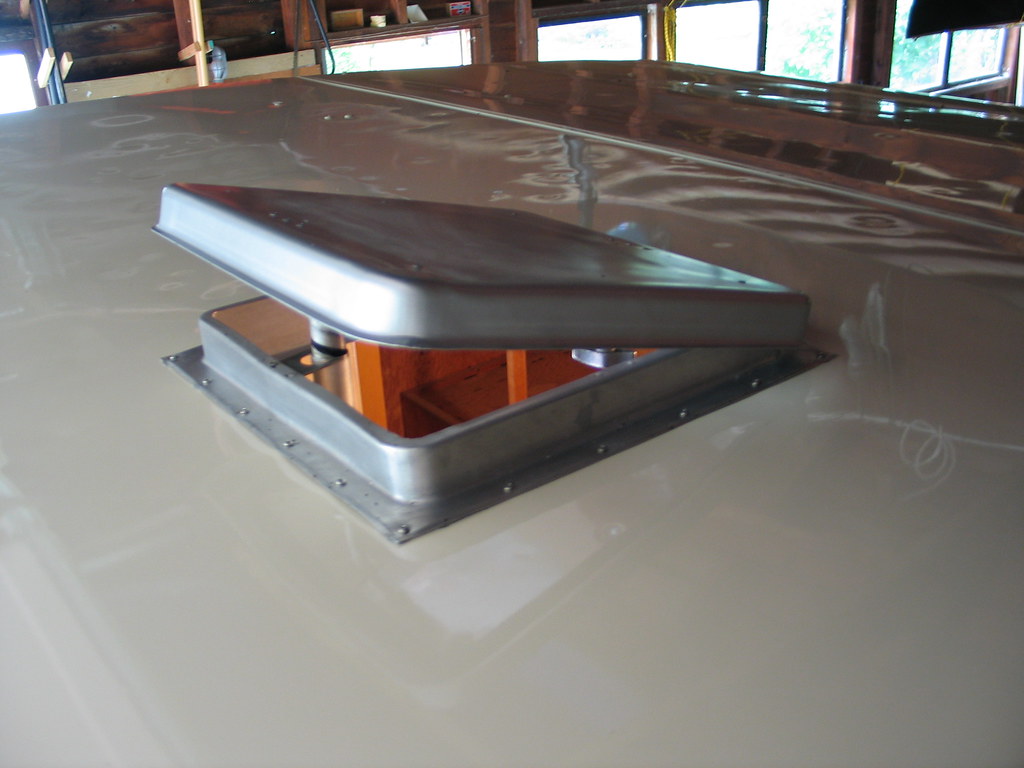
Each rooftop AC unit on a motorhome creates its own sealing challenge. The unit’s rubber gasket sits on a 14x14-inch opening in the roof, and the four bolts holding the unit down compress that gasket against the membrane. Over time the gasket degrades, the bolts lose torque, and water wicks through.
A reseal job that includes removing and reinstalling the AC unit to replace the gasket adds $150-$300 per unit in labor. Most shops quote this as part of a full reseal on a multi-AC coach. On a three-unit Class A, that can add $450-$900 to the total before any membrane or decking work is priced.
If a shop quotes you a reseal without mentioning the AC gaskets, ask. A reseal that leaves degraded gaskets in place will be back in service in 18-24 months.
For the broader picture on full membrane and decking jobs, the motorhome roof replacement guide covers what happens when repair scopes grow large enough that replacement makes more financial sense. As a rule of thumb, when repair quotes approach $5,000-$6,000 on a coach worth less than $40,000, the replacement math is worth running.
The RV roof repair guide covers repair costs across all RV types including trailers and fifth wheels. If you are trying to compare motorhome pricing against the general RV market, that page is the reference.
For reseal-only work, the roof resealing cost guide breaks down what shops do differently from a DIY reseal and when the professional version is worth the cost.
If a repair reveals water that has already reached the interior, the RV water damage repair guide covers the remediation cost from that point forward.
If the damage traces to a specific storm, photograph it with a timestamp before anything gets touched. Adjusters look for evidence that the storm event and the damage line up in time, and that’s a much easier case to make with photos taken the same week than to reconstruct after the fact.
Before filing anything with your carrier, the insurance and warranty guide covers what RV policies typically pay for on roof claims and what they exclude.
What drives the price
| Cost factor | How it moves the price |
|---|---|
| Roof material on your specific class | Class A coaches are almost always fiberglass or TPO over fiberglass decking. Class C units use fiberglass over the cab and EPDM rubber over the living area. Class B vans use rubber or a factory-coated metal. Material determines both repair method and labor skill required. Fiberglass and gelcoat work costs more and takes longer than rubber patching. |
| Motorhome length and roof square footage | A 24-foot Class C has roughly 200 square feet of roof. A 40-foot Class A diesel pusher has nearly 400. Labor for a full reseal scales directly with square footage, which is why Class A owners typically pay 40-80% more than Class C owners for the same seam-reseal scope. |
| Number of roof penetrations | Motorhomes carry more penetrations than most trailers: two or three AC units, a heat pump, multiple roof vents, a solar array, a sewer vent, and antenna mounts are common on Class A coaches. Each one is a potential failure point requiring individual attention. A coach with three AC units can add $300-$600 in reseal labor over a single-unit rig. |
| Fiberglass vs. rubber repair skills | Resealing EPDM is beginner-accessible. Repairing a fiberglass crack invisibly requires gelcoat color-matching, wet layup or resin injection, and finish grinding. Very few mobile RV techs carry that skill; shops that specialize in fiberglass charge accordingly. Expect a significant premium for cosmetically clean gelcoat work versus a functional-but-visible patch. |
| Cap seam location (front vs. rear vs. side) | The front cap on a Class A or Class C is where the roof panel meets the vertical fiberglass fascia. That seam flexes more than any other on the coach because driving vibration is greatest at the nose. A front cap seam repair that includes inspection and treatment of adjacent lap joints typically runs $400-$900 more than a mid-roof seam. |
| Water intrusion and decking condition | Motorhomes use luan or OSB decking under the membrane. Once water saturates that layer, replacement adds $1,500-$3,500 before any surface work begins. Class A coaches with raised roof sections over the bedroom or bath area are especially susceptible because those transitions create seam geometry that holds pooled water. |
| Shop vs. mobile tech availability | A 40-foot Class A cannot easily get into a service bay at most independent shops. Either you need an RV-specific shop with high bays and the right lifts, or a mobile tech. Mobile techs typically charge $100-$175/hr; RV dealer service departments charge $150-$225/hr. Specialty fiberglass-only shops in major markets can charge $200-$275/hr. |
DIY or hire a pro?
- Cost
- $60-$350 in materials
- Time
- Half a day to a full weekend
- Skill
- Intermediate for seals; advanced for fiberglass
Resealing the seams and penetration collars on a motorhome with EPDM or rubber sections is within reach of a careful owner. Dicor self-leveling lap sealant handles most penetration reseals; EternaBond RoofSeal tape covers membrane cracks and seam runs. Where DIY becomes genuinely difficult is on fiberglass: color-matching gelcoat, mixing resin properly, and finishing without a visible repair line requires tools and skill that most owners do not have. A functional patch is achievable; an invisible one is not. If the roof is all-fiberglass (common on newer Class A coaches), the honest answer is that reseal maintenance is DIYable but crack repair is not.
What you'll need
- Dicor self-leveling lap sealant (affiliate)
- EternaBond RoofSeal tape (affiliate)
- Fiberglass repair kit with resin and mat
- Gelcoat matching kit
As an Amazon Associate, we earn from qualifying purchases.
- Cost
- $800-$8,500 depending on scope
- Time
- 1-4 shop days; 3-6 weeks scheduling at busy dealers
- Booking
- Get at least two quotes; ask specifically about fiberglass experience
Professional repair is the right call whenever the damage involves fiberglass cracks that need to be invisible, when the front or rear cap seam has separated, when multiple AC units need to come off for a full reseal, or when you hear water dripping inside the coach but cannot locate the entry point. Motorhome leak tracing is complicated by the coach's length and the number of potential entry points. A tech who traces a leak on a 40-foot Class A and finds it entering at the rear cap seam but draining forward to show up as a ceiling stain at the bedroom is doing real diagnostic work. Budget 2-4 hours of trace labor on large coaches before any repair begins.
Will insurance or a warranty cover it?
- RV insurance may cover this when the cause is a covered peril (storm, collision, fallen tree), not gradual wear or neglect.
- This is usually out of pocket. Standard policies treat it as wear and maintenance. A service contract bought before it fails is the main way to shift the risk.
Storm damage (hail, falling tree, wind) on a drivable motorhome is typically covered under comprehensive auto or RV insurance after your deductible. Gradual seam deterioration, UV-cracked gelcoat, and maintenance-deferred leaks are not covered. Some policies have a separate RV endorsement with a lower deductible for roof events; check yours before filing.
Coverage depends on your policy and the cause of damage. Confirm specifics with your provider.