RV Propane Tank Replacement Cost: What to Expect in 2026
RV propane tank replacement costs $55-$140 for a new DOT cylinder, $30-$70 to recertify one instead, or $865-$930+ for a motorhome's built-in ASME tank. Here's what drives the range.

Typical cost
$30–$930
Recertifying an existing DOT cylinder runs $30-$70; a new 20-40 lb DOT cylinder runs $55-$140; a motorhome's built-in ASME tank runs $865-$930+ for the tank alone, more with removal and reinstall labor
Most people pay around
$150
Costs verified July 2026
RV propane tank replacement costs $55 to $140 for a new DOT cylinder on a travel trailer or fifth wheel, or $30 to $70 to recertify the tank you already have instead of replacing it. Motorhomes are a different animal entirely: their built-in ASME tank runs $865 to $930-plus for the tank alone, before any removal and reinstall labor. Which category applies depends on one thing: does the tank unbolt and travel to the store, or is it plumbed into the chassis?
DOT cylinder or ASME tank: the question that decides everything
Two completely different propane containers show up under the phrase “RV propane tank,” and confusing them is the fastest way to get a wildly wrong cost estimate.
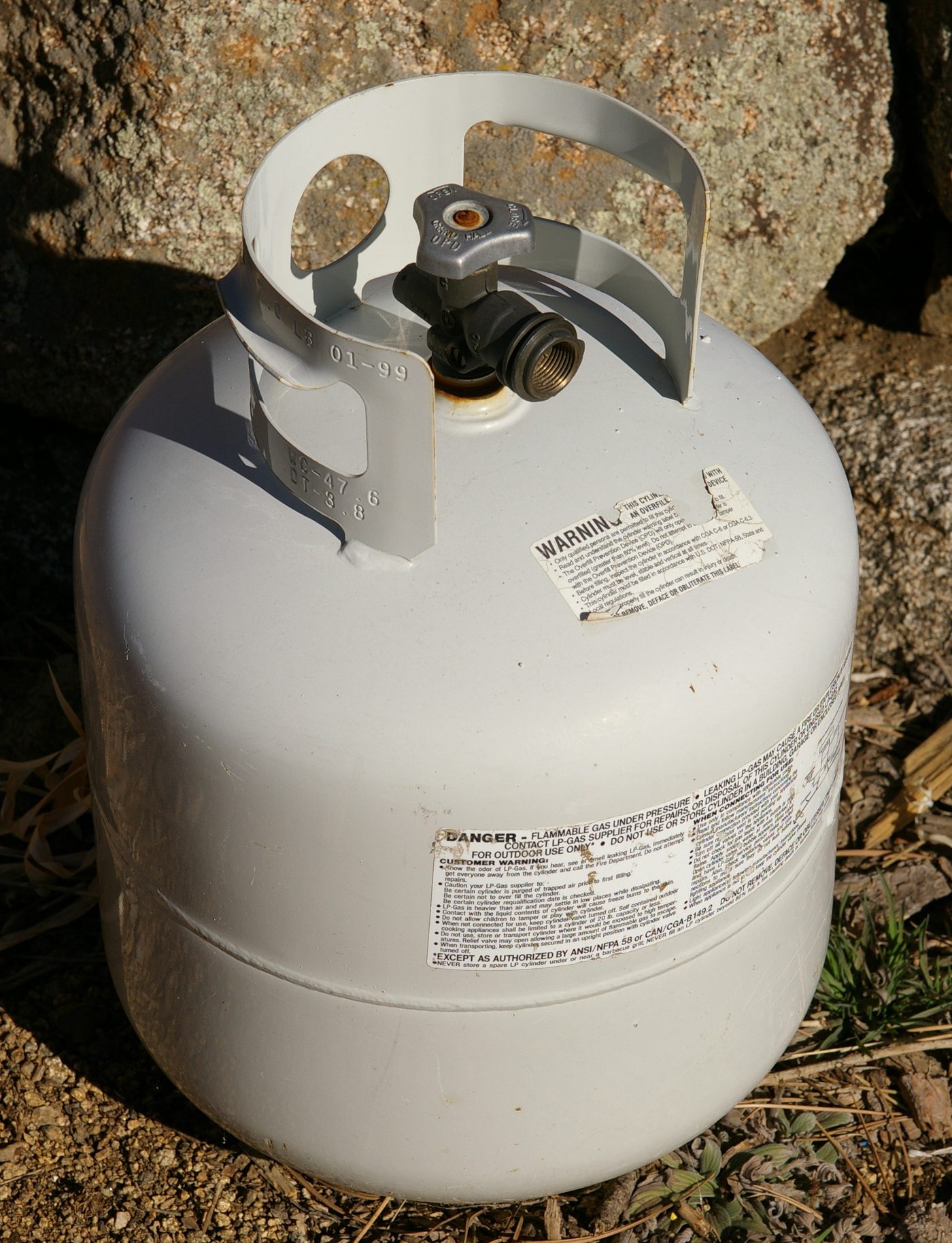
Towable RVs, travel trailers and fifth wheels, use portable DOT cylinders. These are the same basic design as the tank on a backyard grill: a vertical steel or aluminum cylinder that bolts to a bracket on the trailer’s tongue, connects with a flexible pigtail hose, and can be unbolted, carried to a propane retailer, and exchanged or refilled like any other portable tank. Because it’s portable and mass-produced, it’s cheap. A new one runs $55 to $140 depending on size.
Motorhomes are built differently. Their propane tank is an ASME (American Society of Mechanical Engineers) horizontal tank, permanently mounted to the chassis and plumbed with a fixed line, filled in place at a propane station rather than swapped. It’s not portable, it’s not interchangeable between RVs, and it costs accordingly: a 20.3-gallon ASME tank runs $865 to $930-plus for the tank alone, with removal and reinstall labor on top since it’s bolted into the frame.
Why recertifying an old tank almost always beats buying new
DOT cylinders don’t last forever on paper, but they don’t need replacing on a fixed schedule either. Federal requalification rules require a DOT cylinder to be recertified 12 years after its manufacture date, then every 5 years after that if it’s requalified by visual inspection, which is how the overwhelming majority of RV propane tanks get recertified. A trip to a propane retailer that offers recertification, many do, runs $30 to $70 for that visual inspection and a new stamped date on the collar.
Compare that to $55-$140 for a brand new cylinder of the same size, and recertification is the clear financial move as long as the tank actually passes inspection. It won’t if there’s significant rust, a dented body, or a corroded valve; retailers won’t stamp a tank they’d be liable for if it fails later. A tank that fails inspection has to be replaced, no way around it, but a tank that’s simply old and otherwise sound is nearly always cheaper to recertify than replace.
| Path | What it costs | When it applies |
|---|---|---|
| Recertify existing DOT cylinder | $30-$70 | Tank is structurally sound, just past its 12-year or 5-year window |
| New 20 lb DOT cylinder | $55-$95 | Tank failed inspection, or an upgrade from a smaller size |
| New 30 lb DOT cylinder | $65-$100 | Most common travel trailer size |
| New 40 lb DOT cylinder | $95-$140 | Larger trailers, heavier propane users |
| New ASME motorhome tank | $865-$930+ | Motorhome tank corroded, damaged, or failed |
What size tank costs what, and why bigger isn’t proportionally pricier
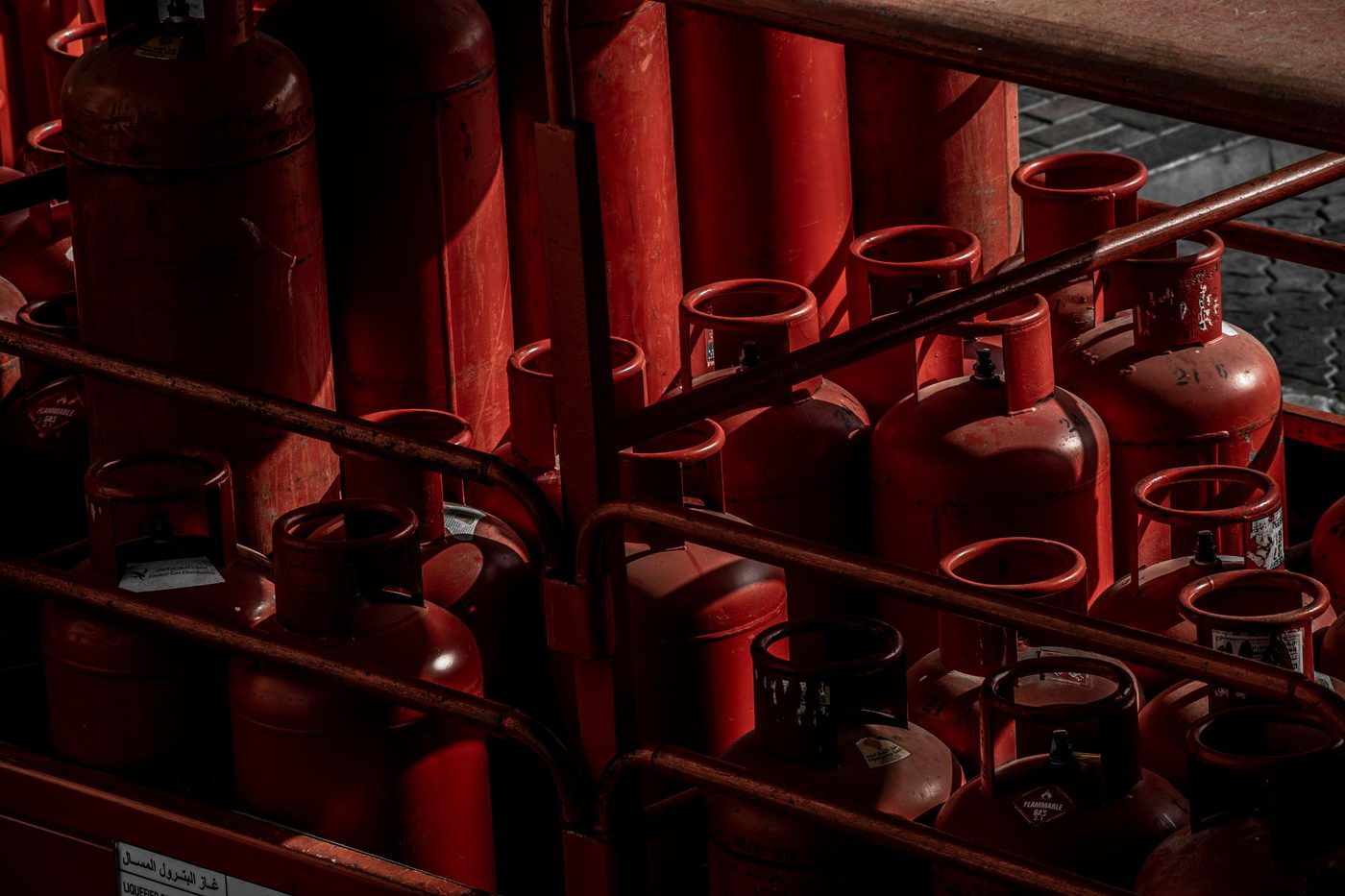
DOT cylinders come in three common RV sizes: 20 lb (about 4.7 gallons of propane), 30 lb (about 7.1 gallons), and 40 lb (about 9.2 gallons). Retail pricing for a new steel cylinder runs roughly $55-$95 for the 20 lb size, $65-$100 for the 30 lb, and $95-$140 for the 40 lb, based on current listings from Home Depot, Costco, and comparable RV parts retailers.
Notice the pattern: the 40 lb tank costs roughly double the 20 lb tank, but it holds nearly twice the propane, so the per-pound cost actually improves with size. That’s part of why some owners upgrade from a factory-standard 20 lb tank to 30 lb even before the original tank fails; more capacity per trip for a manageable cost step-up, as long as the trailer’s tongue weight rating and mounting bracket can handle the larger, heavier tank.
Aluminum cylinders are the other variable worth knowing about. They run roughly double a comparable steel tank’s price but weigh about 40% less and never rust, which matters most on a trailer that lives outdoors year-round or sees winter road salt. For most owners the steel tank’s lower upfront cost wins out, but anyone who’s had a steel cylinder rust through after a decade of exposure understands the appeal.
What an ASME tank replacement actually involves
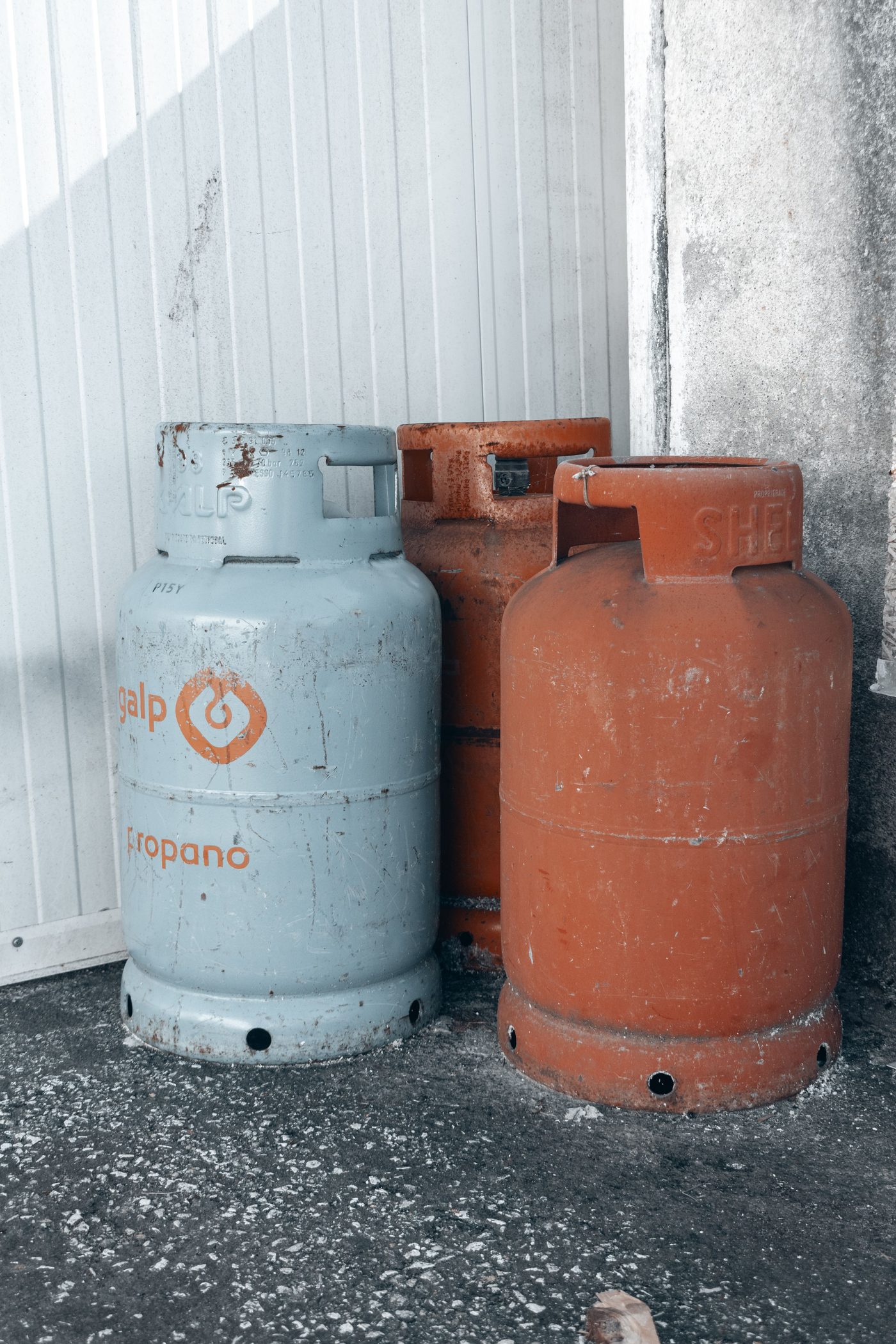
Replacing a motorhome’s built-in tank is a different scope of job entirely. There’s no exchange counter option: a shop or mobile RV tech has to safely drain any remaining propane, disconnect a fixed gas line rather than a flexible hose, unbolt a tank that’s often structurally integrated into the chassis, mount the new tank, reconnect the gas line, and pressure-test every joint before signing off. One documented shop quote for propane system work came to roughly 6 hours of labor at $120/hr plus $180 in incidental parts, about $900 total, separate from the tank’s own purchase price.
Add the tank’s $865-$930 cost to that labor estimate and a full ASME tank replacement can run well past $1,500 all-in, depending on the shop’s rate and how accessible the tank is on that particular chassis. It’s a rare repair. Most ASME tanks last the life of the motorhome, since they’re not subject to the DOT-style aging-out schedule that forces the recertification conversation on towable RVs.
Can you swap a DOT cylinder yourself?
Yes, and it’s one of the simplest jobs on an RV. Close the tank valve, disconnect the pigtail hose at the regulator, unbolt the retaining bracket or strap holding the cylinder to the tongue, lift the old tank out, and reverse the process with the replacement. No specialized tools beyond a wrench for the POL or QCC1 fitting.

The step owners skip and shouldn’t: after reconnecting, brush a soapy water solution over every fitting, the regulator connection and the tank valve, and watch for bubbles before lighting anything on the trailer. Propane systems don’t announce a bad connection until something goes wrong, and a two-minute leak check catches it before that happens inside a closed compartment.
ASME tank work is not a DIY job under any circumstance. Fixed gas line connections, chassis-integrated mounting, and the safety margin of a permanently plumbed fuel system put this firmly in professional territory.
Does insurance or an extended warranty cover propane tank replacement?
Almost never for a DOT cylinder. Recertification and replacement of a portable propane tank sit in the same “routine maintenance” bucket as batteries and tires, wear-and-age items that essentially no RV extended warranty plan covers, regardless of tier. It’s simply not a mechanical breakdown; it’s a consumable that ages out on a known schedule.
A motorhome’s built-in ASME tank sits in a slightly grayer zone. If it fails from a genuine defect, a corroded weld seam or a failed pressure relief valve, rather than ordinary age, some comprehensive plans that list the fuel system as a covered component may pay for it. That’s worth confirming against the actual plan schedule rather than assuming either way; the extended warranty cost guide covers how these plans typically define covered mechanical components. Standard RV insurance follows a similar pattern: damage from a covered collision or fire is covered, ordinary corrosion or aging out of certification is not.
How propane tank cost compares to other appliance-adjacent repairs
A propane tank rarely fails in isolation from the systems it feeds. The RV furnace and water heater both draw from the same propane supply, and a tank that’s chronically low on pressure or delivering inconsistent flow can present as a furnace or water heater problem before anyone thinks to check the tank and regulator first. If a generator on the rig also runs on propane rather than gasoline, the generator repair guide is worth checking too, since a failing regulator or a tank that’s aged out of certification can starve more than one appliance at once.
What drives the price
| Cost factor | How it moves the price |
|---|---|
| DOT cylinder vs. ASME tank | This is the single biggest fork in the cost. Towable RVs (travel trailers, fifth wheels) use portable DOT cylinders, the same style tank as a gas grill, that unbolt and can be swapped or refilled at any propane retailer. Motorhomes use a permanently mounted ASME horizontal tank plumbed into the chassis, filled in place rather than swapped. A DOT cylinder replacement is a $55-$140 parts problem. An ASME tank is an $865-$930+ tank plus real removal and reinstall labor, since it's bolted to the frame and plumbed with a fixed line. |
| Recertify vs. replace a DOT cylinder | A DOT cylinder that's still structurally sound but past its 12-year (then 5-year) requalification window can usually be recertified for $30-$70, far less than a new tank. Recertification only works if the tank passes visual inspection: no significant rust, dents, or valve damage. A tank that fails inspection has to be replaced outright, and most propane retailers won't recertify a tank that looks questionable since they're liable for what they sign off on. |
| Tank size (20 lb, 30 lb, 40 lb) | A 20 lb cylinder (about 4.7 gallons) runs $55-$95 new; a 30 lb cylinder (about 7.1 gallons) runs $65-$100; a 40 lb cylinder (about 9.2 gallons) runs $95-$140. Bigger tanks cost more in steel and take longer to fill, but the per-pound cost actually drops as size goes up, which is why owners who go through propane quickly sometimes upgrade from 20 lb to 30 lb even without a failed tank. |
| Steel vs. aluminum | Standard steel DOT cylinders are the cheapest option and what most RVs ship with from the factory. Aluminum cylinders cost roughly double a comparable steel tank but weigh about 40% less and never rust, which matters on a trailer where every pound of tongue weight is budgeted and where a rusted-through steel tank is a genuine failure mode after a decade near road salt. |
| Where the work happens | A retail propane exchange counter (hardware store, gas station, RV supply store) is the cheapest path for a straight cylinder swap: hand over the old tank, get a filled replacement, pay the difference. A mobile RV tech or shop that has to unbolt an ASME tank, disconnect the gas line, and reinstall a new one bills real labor on top of the tank itself, typically at the same $100-$175/hr range other RV system work runs. |
| 12-year and 5-year requalification cycle | DOT cylinders must be requalified 12 years after the manufacture date stamped on the collar, then every 5 years after that if requalified by visual inspection (the method most RV propane retailers use). A tank nobody bothers to check can quietly age out and get refused fill service at the counter, which is usually how owners discover the requirement, at the worst possible moment on a trip. |
| ASME tanks skip the recertification cycle entirely | A motorhome's built-in ASME tank has no DOT-style expiration date and isn't subject to the 12-year/5-year requalification cycle, since it's inspected and stamped once at manufacture under a different code. That doesn't mean it lasts forever: corrosion, a failed pressure relief valve, or physical damage from road debris can still take an ASME tank out of service, and replacement means removal labor a simple cylinder swap never requires. |
DIY or hire a pro?
- Cost
- $55-$140 in parts for a straight DOT cylinder swap; recertification isn't a DIY task
- Time
- 10-15 minutes to unbolt an old DOT cylinder and bolt in a new or exchanged one
- Skill
- Beginner for a DOT cylinder swap on a towable RV; not applicable to ASME tanks, which require certified removal and reinstall
Swapping a DOT cylinder on a travel trailer or fifth wheel is about as simple as RV maintenance gets: close the tank valve, disconnect the pigtail hose, unbolt the retaining bracket, lift the old tank out, and reverse the process with the new or freshly filled tank. No tools beyond a wrench are usually needed. The one step owners skip and shouldn't: after reconnecting, brush a soapy water solution on every fitting and watch for bubbles before lighting anything, which catches a bad connection before it becomes a leak inside a closed compartment. Recertification itself isn't something an owner does; it requires a propane retailer's inspector to examine and stamp the tank, so budget the $30-$70 as a service fee, not a parts cost.
What you'll need
- Replacement DOT cylinder, sized to match the trailer's mounting bracket (20/30/40 lb)
- Soapy water leak-test solution or a commercial gas leak detector spray (affiliate)
- Adjustable wrench sized for the POL/QCC1 fitting
As an Amazon Associate, we earn from qualifying purchases.
- Cost
- $120-$900+ depending on whether it's a mobile tech swap or a full ASME tank removal and reinstall
- Time
- Same-day for a DOT cylinder swap at a retail counter; a half day to a full day for an ASME tank replacement including gas line work and a leak test
- Booking
- Required for any ASME tank replacement, and worth it for a DOT cylinder that's showing rust, dents, or valve corrosion rather than simple age
An ASME tank swap on a motorhome is not a driveway job. It means draining any remaining propane safely, disconnecting a fixed gas line rather than a flexible pigtail hose, unbolting a tank that's often integrated into the chassis structure, and pressure-testing every reconnected joint before the system goes back into service. A shop quote of 6 hours at $120/hr plus $180 in incidental parts, roughly $900 total, is a realistic ballpark for that scope of work, separate from the tank's own $865-$930 purchase price. For a simple DOT cylinder that's merely due for its 12-year or 5-year check, a propane retailer's inspection counter is faster and cheaper than any RV shop visit.
Will insurance or a warranty cover it?
- An extended warranty or service contract may cover this if the failure is mechanical and the component is listed in your plan.
- This is usually out of pocket. Standard policies treat it as wear and maintenance. A service contract bought before it fails is the main way to shift the risk.
DOT cylinder replacement and recertification are treated as routine maintenance, the same category as batteries and tires, and essentially no RV extended warranty plan covers them regardless of tier. A motorhome's built-in ASME tank sits in a grayer zone: if it fails from a genuine defect (a corroded weld seam, a failed pressure relief valve) rather than age or road-debris damage, some comprehensive mechanical breakdown plans that list the fuel system as a covered component may pay for it, though this is worth confirming against the plan's actual schedule before assuming coverage. Standard RV insurance treats a propane tank the way it treats other aftermarket-adjacent equipment: covered when damage happens as part of a covered collision or fire loss, excluded for ordinary wear, corrosion, or a tank that simply ages out of certification.
Coverage depends on your policy and the cause of damage. Confirm specifics with your provider.